Bin stores near me: how they work and what to know before you go
Bin stores sell Amazon returns by the pound on a sliding price schedule. Here is exactly how they work, what to expect, and how to find one near you.
May 21, 2026
Bin stores near me: how they work and what to know before you go
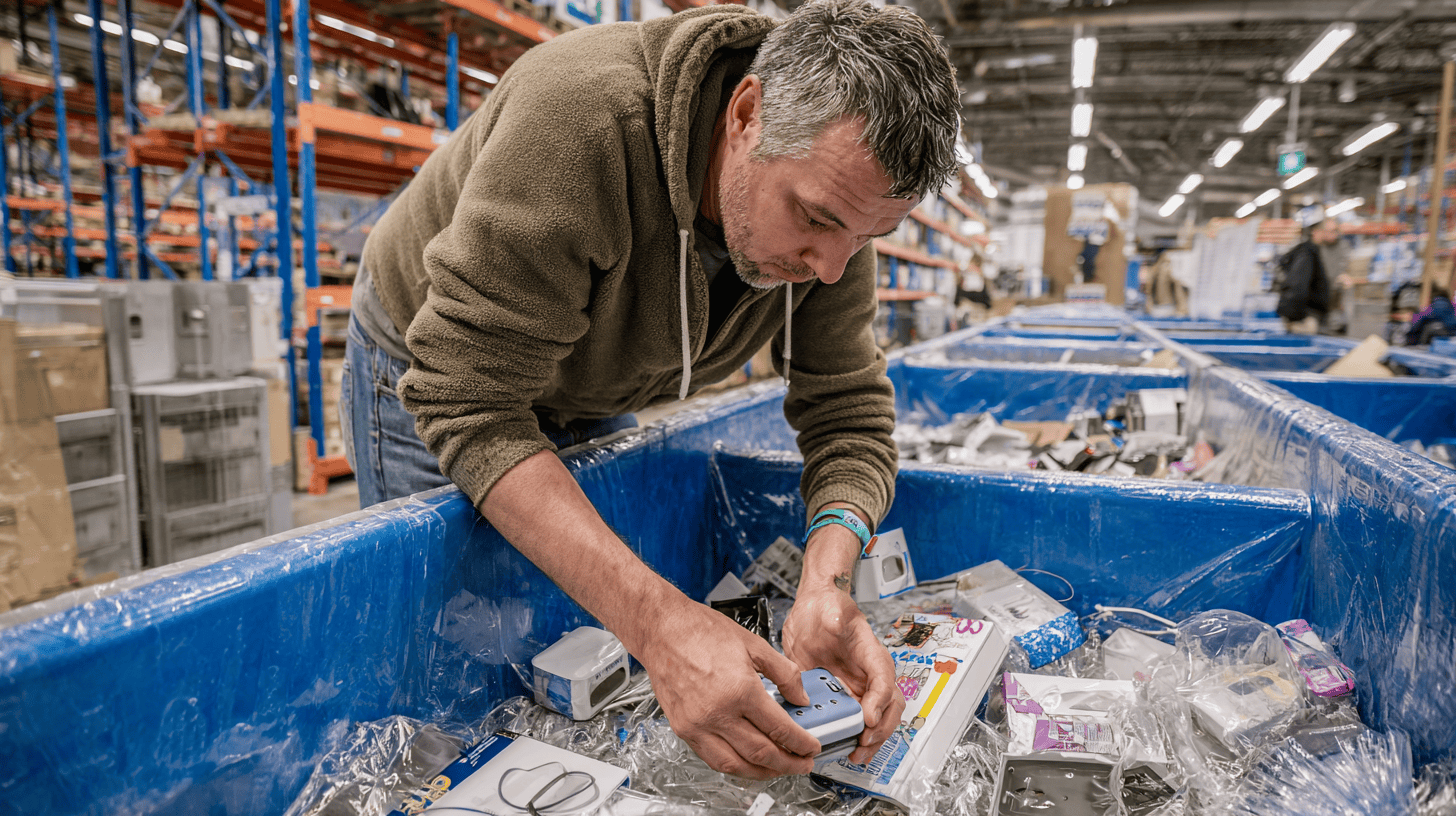
Every day Amazon processes millions of returns. Not all of them go back on shelves. A large portion gets sorted into pallets and sold wholesale to liquidation buyers, and those buyers open the stores you have been hearing about. Bin stores near me is one of the fastest-growing search terms in retail, and for good reason: the prices on restock day can be genuinely shocking. But walk in on the wrong day without knowing how pricing works and you will pay more than the item is worth.
What a bin store actually is
A bin store is a liquidation retail outlet that buys returned and overstock merchandise from major retailers, primarily Amazon but also Target and Walmart, in bulk pallets, then resells that inventory by placing it loose in large open bins. There are no shelves organized by category. No price tags on individual items. Everything in the store shares the same flat daily price, and that price drops on a set schedule throughout the week.
The model is fundamentally different from a thrift store. Thrift stores price items individually based on condition and perceived value. Bin stores price everything identically based on where the store is in its weekly pricing cycle. A $400 Bluetooth speaker and a $3 phone case sit in the same bin at the same price. That gap between what something costs and what it is worth is the entire business model, for the store and for the resellers who shop there.
How the pricing schedule works
This is the part most first-timers miss entirely. Bin stores do not price items individually. They price the entire store by day. On restock day (usually Monday or Tuesday, depending on the store), everything in the store is at its highest price, typically $7 to $10 per item. Each subsequent day, the price drops by $1 to $2. By the end of the week, items that haven't sold might be $1 or even free. Then the cycle resets with a new pallet drop.
The implication is that timing your visit completely changes the math. Shopping on day one means you get first pick of the freshest inventory at the highest price. Shopping on day five means you are digging through what everyone else passed on, but paying almost nothing. According to the LocalBinStoreNearMe.com store locator and guide, most bin stores publish their restock days and pricing schedules on their Facebook page rather than a website, which means the best way to know the schedule is to follow the store on Facebook before you go.
| Day in cycle | Typical price per item | Best for |
|---|---|---|
| Restock day (Day 1) | $7–$10 | Resellers hunting high-value finds |
| Day 2 | $5–$7 | Casual shoppers, second look at inventory |
| Day 3 | $3–$5 | Bargain hunters, bulk buyers |
| Day 4–5 | $1–$3 | Lot buyers, filler inventory |
| Final day | $0.50–$1 or free | Last chance before next restock |
How to find bin stores near you
Most bin stores are small, independently run operations that rely entirely on foot traffic. They rarely invest in SEO or even a website. Searching "bin stores near me" on Google works for the bigger or better-established locations, but misses the majority of stores that exist only on Facebook Marketplace.
The most reliable method, used consistently by resellers who have found stores their neighbors do not know exist, is searching Facebook Marketplace for sellers with unusually large, diverse inventories of brand-new items. A seller posting 200 listings of random electronics, kitchen gadgets, and kids' toys at low prices is almost always a bin store or liquidation outlet posting overflow stock. Click their profile and their physical store address is usually right there. The technique was documented by reseller Kaitlin Madden, who found her local bin stores this way after standard Google searches kept returning the same few large chains.
What you will actually find in the bins
The inventory is genuinely random. That is not a complaint. It is the defining feature. A single pallet from an Amazon returns warehouse can contain a Dyson vacuum, a set of silicone baking molds, a Bluetooth speaker, three phone cases, and a box of LED strip lights. The mix changes every restock cycle and varies by which liquidation pallet the store purchased.
Electronics, home goods, clothing, toys, and beauty products are the most common categories. Beauty finds in particular can be valuable: if you are flipping Sephora and cosmetics inventory, there is a real question about whether eBay or Whatnot is the right platform for beauty resellers. High-end finds like a name-brand air fryer, a pair of wireless earbuds, or a KitchenAid attachment show up regularly enough that experienced resellers build their eBay inventory almost entirely from bin stores. The key is knowing what to look for before you walk in. Bring your phone and check eBay sold listings for anything you are unsure about. A 30-second price check before you commit to buying an item at $7 on day one can save you from picking up something worth $4.
Bin stores as a reseller sourcing channel
Bin stores beat thrift stores for electronics and home goods because the inventory skews newer and is more likely to be name-brand. They lose to thrift stores for clothing. Condition varies wildly and fast-fashion mixed into Amazon return pallets is common. The best resellers who use bin stores regularly know their target categories before they walk in and ignore everything else in the bin.
Shopping on restock day at a higher per-item price still makes sense for resellers if the category is strong. Paying $8 for a confirmed-working Bluetooth speaker that sells for $45 on eBay is a better margin than paying $2 for a random item that turns out to be worth $3. The math only works if you check comps before you buy. Once you have the finds, listing your entire bin store haul on eBay in under 24 hours is the workflow that keeps sourcing and selling momentum locked together. MyListerHub's eBay listing tools let you get those finds listed and live fast, so the time between sourcing and selling stays short.
- ☐ Find the store's Facebook page before visiting. Restock schedule is usually posted there
- ☐ Know the day in the pricing cycle before you walk in
- ☐ Bring your phone and check eBay sold comps on anything you're considering
- ☐ Open boxes and test electronics before committing. No returns on as-is sales
- ☐ Focus on your target categories and ignore the rest of the bin
- ☐ List finds the same day to keep sourcing and selling momentum going
Frequently asked questions
Found something good at the bins?
Get it listed on eBay before the momentum fades. MyListerHub auto-fills item specifics, optimizes your titles, and gets your bin store finds live fast.
List your finds with MyListerHub
by Jack Blum
Jack has been selling on eBay since 2002, with deep roots in the automotive and DTC space. His experience comes from running real operations at scale, managing complex parts inventory, fitment accuracy, and customer expectations. He shares practical insights based on what actually works for long-term growth on eBay.
by Jack Blum
Jack has been selling on eBay since 2002, with deep roots in the automotive and DTC space. His experience comes from running real operations at scale, managing complex parts inventory, fitment accuracy, and customer expectations. He shares practical insights based on what actually works for long-term growth on eBay.
Get More eBay Seller Updates
Follow MyListerHub as a preferred source on Google and see more of our eBay seller news, guides, and industry updates.