eBay Is Down Again: What Broke and What Sellers Should Do Right Now
eBay experienced two outages this week affecting search, checkout, login, and the API that powers third-party seller tools. This article explains what an API is, why the outage affects your entire toolkit, and what sellers can do right now.
April 29, 2026

This Is Not a Glitch. This Is the Second Time This Week.
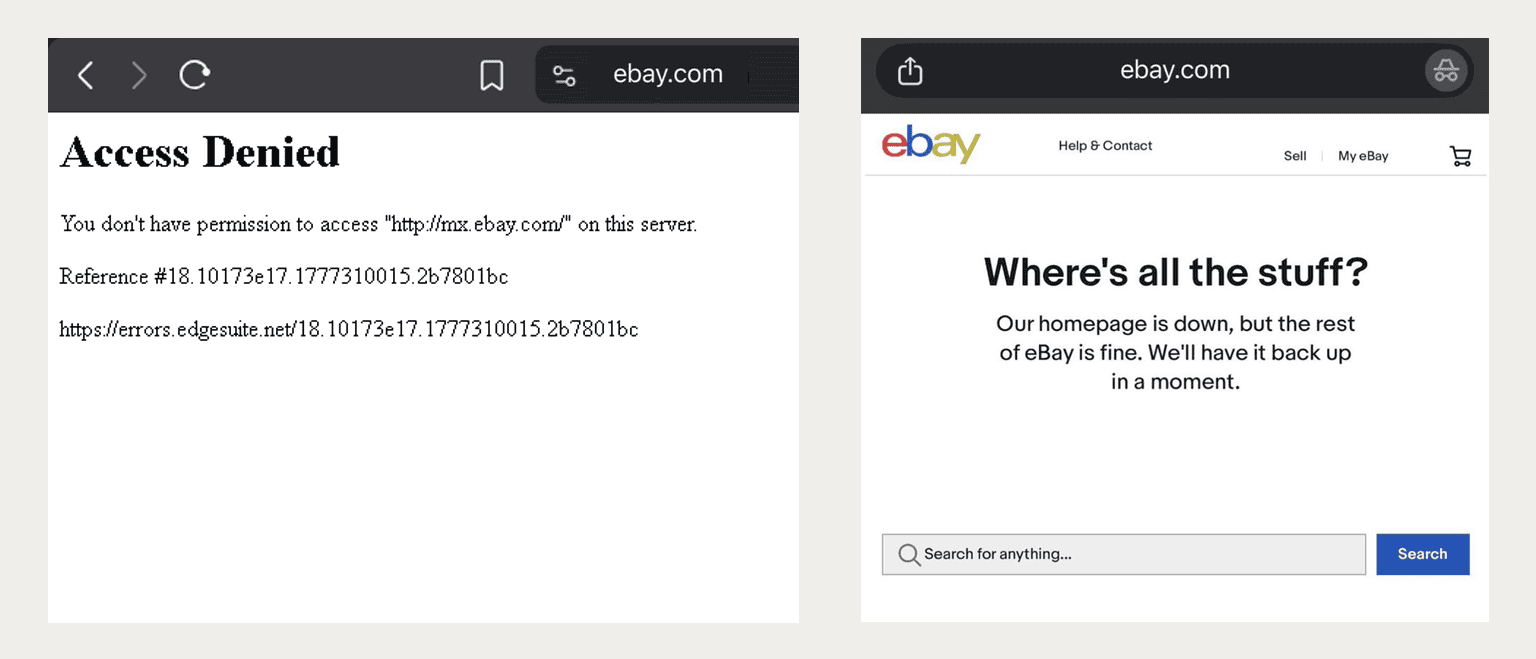
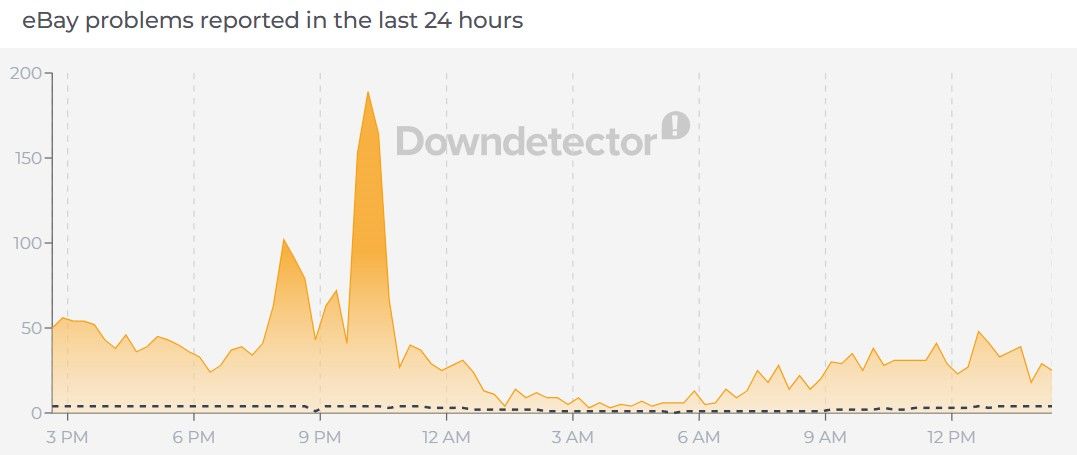
If you tried to log into eBay on Sunday, April 26, and found yourself staring at an error message, you were not alone. Reports of problems began flooding in around 3:30 PM Eastern Time, with over 1,300 users reporting failures within hours. Search was broken. Checkout was failing. Login was unreliable. And for sellers who rely on third-party tools to manage their business, the API, the invisible connection that makes those tools work, went completely dark.
eBay scrambled to respond. By Monday, the site appeared to stabilize for some users. Then, on April 29, reports of disruptions surfaced again. Search returning no results. Login failures. Users in the United States, United Kingdom, and Australia all hitting the same walls.
This is not an isolated bad weekend. Similar billing and search disruptions were reported in late March and again in mid-April. A pattern this consistent does not happen by accident, and eBay's official response has offered sellers almost nothing. Their statement acknowledged "intermittent technical issues" and said engineers were working to restore full functionality. No root cause. No timeline. No explanation.
eBay has since announced protections for affected sellers, which we will cover further down. But before we get to what you should do, you need to understand what actually broke. Because "eBay is down" is only half the story.
What Is an API, and Why Does It Matter to You?
You have probably heard the phrase "the API is down" without anyone explaining what that actually means. Here is the plain English version.
API stands for Application Programming Interface. That sounds complicated, but the concept is simple. An API is how programs talk to each other. Think of it as the wiring behind your light switch. When you flip the switch, you do not see the wires, the circuit breaker, or the electrical panel doing the work. You just expect the light to turn on. The moment those wires are cut, nothing happens, no matter how many times you flip the switch.
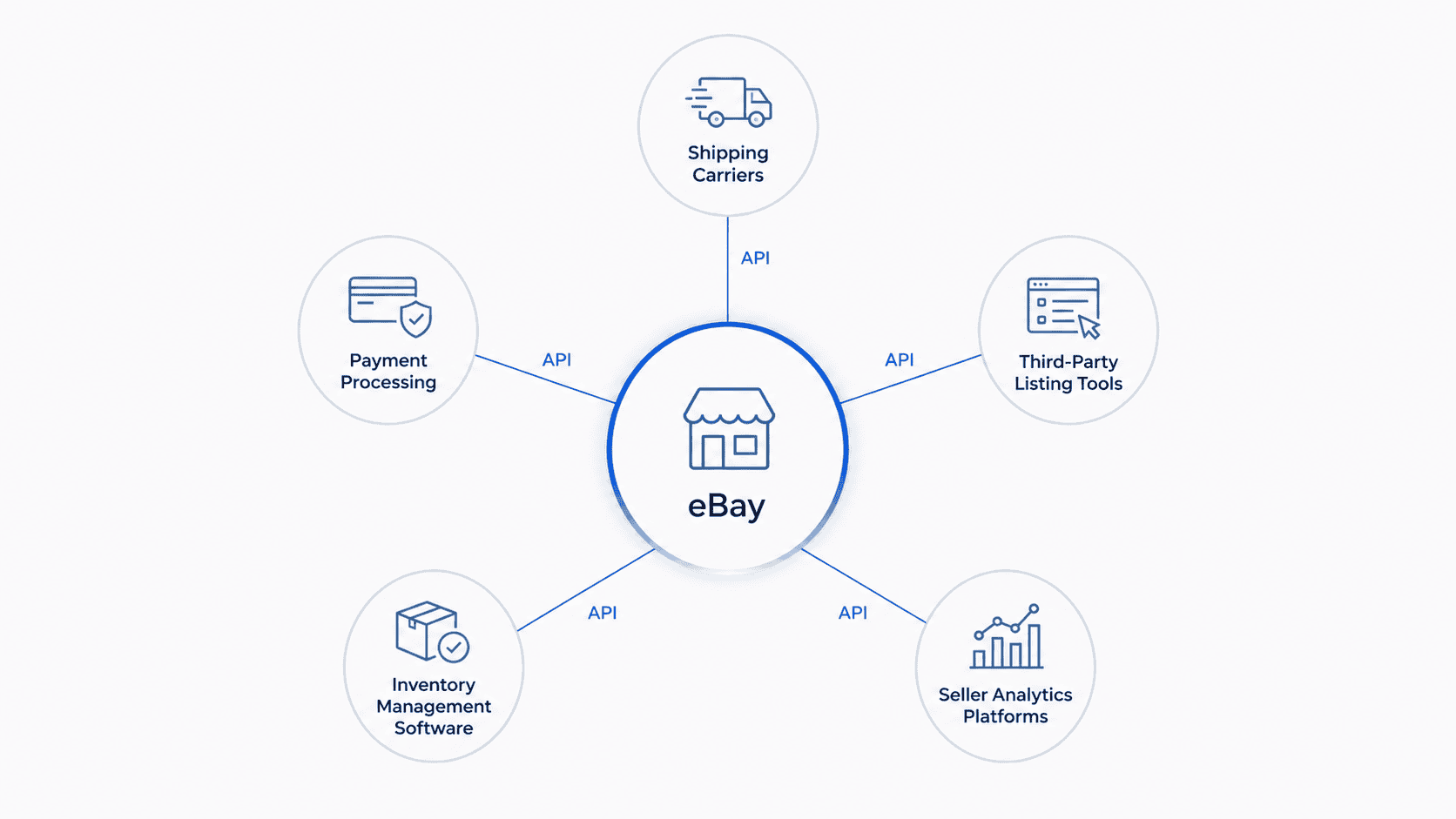
APIs work the same way across virtually everything you use online. When you open Waze and it shows you a map, Waze is pulling that map data from Google through an API. When you check out on an online store and your credit card gets processed, that store's website is talking to your bank through an API. When your shipping label software pulls your eBay orders, it is connecting to eBay through an API. Without APIs, there is no internet as we know it. No apps. No AI tools. No connected services of any kind.
So when eBay's API goes down, the problem is not just that eBay's website loads slowly. Every external tool that connects to your eBay account stops working. Your listing software cannot push updates. Your repricing tool cannot read your inventory. Your shipping platform cannot pull your orders. Your automation rules cannot execute. Every tool in your stack that depends on eBay goes silent at exactly the same time.
That is why sellers who manage hundreds of listings felt this outage far harder than casual buyers. It was not an inconvenience. It was a full stop on their operation.
The Internet Has a Hidden Layer Most People Never See
Here is something most eBay sellers have never thought about. When you visit eBay, you are not connecting to eBay. You are connecting to a chain of invisible companies whose names you have likely never heard, and each one of them can break the experience without any warning to you or to eBay.
Take a company called Cloudflare. It handles roughly 20 percent of all internet traffic on the planet. Most internet users have never heard of it. In February 2026, a single internal configuration error at Cloudflare took down Uber Eats, Wikipedia, Steam, Workday, and portions of Amazon Web Services simultaneously. None of those companies made a mistake that day. None of their own systems failed. But because they all ran on top of Cloudflare's infrastructure, they all went down together. Nearly 4,000 Uber Eats outage reports were filed in under ten minutes by people who had no idea Cloudflare was even involved.
Then there is Vercel. Vercel is a web infrastructure company that hosts and powers millions of websites and applications worldwide. Most people have never heard of it either. In April 2026, a single Vercel employee downloaded a small AI productivity tool called Context.ai and connected it to their work account. That tool had been quietly compromised by hackers months earlier. The attackers used that connection to work their way into Vercel's internal systems and access credentials for a significant number of customer applications. The downstream exposure reached SaaS platforms, financial services, and development teams across the tech industry.
The point is not that Cloudflare or Vercel are careless companies. The point is that the internet is not a single thing you can point to. It is thousands of invisible layers sitting underneath the websites and apps you use every day, and a problem at any one of those layers ripples outward to everything sitting on top of it.
Coincidence or Chain Reaction
Here is where things get harder to explain cleanly, because the answer is genuinely unknown. What follows are verified facts, documented timing, and a question worth asking. It is not a conclusion.
On the day eBay went down, a hacktivist group calling itself 313 Team claimed responsibility for a DDoS attack on the platform. A DDoS attack, which stands for Distributed Denial of Service, works like this: imagine thousands of people all trying to walk through one door at exactly the same moment. The door jams. Nobody gets through. A DDoS attack does the same thing to a server, flooding it with so much fake traffic that legitimate requests cannot get in. eBay has not confirmed this attack occurred, and the claim has not been independently verified. It may be accurate. It may be opportunistic self-promotion by a group looking for attention during a high-profile outage.
Now here is the part worth noting. eBay's website and many of its internal systems run on Next.js, an open-source web framework. Next.js was created by Vercel and is actively maintained by Vercel's engineering team. Vercel, as described in the previous section, suffered a significant security breach on April 19, ten days before eBay went down. No cybersecurity researcher has published a confirmed link between the Vercel breach and eBay's outage. eBay has not mentioned Vercel. Vercel has not mentioned eBay.
What we do know is that April 2026 was an unusually bad month for internet infrastructure across the board. Cloudflare had a major outage in February. Vercel was breached on April 19. Verizon Business experienced a network outage affecting multiple regions on April 22. Zayo Group, a major network carrier, had a disruption on April 25. eBay went down on April 26. Cybersecurity researchers have described the March through April window as having an unprecedented concentration of supply chain attacks targeting the trust boundaries between platforms, cloud providers, and connected services.
Whether these events are connected, coincidental, or part of a broader coordinated campaign against internet infrastructure, nobody outside of active investigations can say. What is not in question is the pattern itself: the systems that major platforms depend on are under sustained pressure, and sellers who rely on those platforms have no visibility into any of it until something stops working.
Source: https://downdetector.com/status/ebay
What eBay Has Promised Sellers
To eBay's credit, the platform did announce concrete protections for sellers affected by the outage. These are posted on eBay's official system status page and are worth documenting now while the outage is still active.
Negative or neutral feedback tied to the technical issues will be removed. Defects resulting from impacted orders, including cancellations and claims closed without seller resolution, will not count against your account. Your valid tracking upload rate and on-time shipping metrics are protected for orders affected during this period.
Auction sellers have a specific option available. If you had an auction end after April 26 at 12:01 PM Pacific Time and you believe the outcome was affected by the outage, you can cancel that order. eBay will protect your seller performance and refund the associated selling and ad fees.
Do not wait to act on this. Document your affected orders now, while the dates and transaction records are clear. Seller protections like these typically have windows, and the process is easier when the evidence is fresh.
[INSERT IMAGE HERE - Cinematic documentary shot, seller at an organized desk or warehouse station, working through inventory during downtime, natural industrial lighting, no staged poses]
What MyListerHub Users Can Do Right Now
If you use MyListerHub, your data is not at risk. Everything you have built in the platform, your listing history, your drafts, your templates, your business policies, your automations, is stored in our database independently of eBay's systems. eBay's outage does not touch any of it.
There is one limitation while eBay's API is down: you cannot submit new listings directly to eBay from the platform. That connection requires eBay's API to be live, and right now it is not.
Everything else works normally. And for sellers who have been meaning to clean things up, get ahead on new inventory, or sharpen their listings before the next sales cycle, this is actually a window worth using.
You can revise existing listings and save all changes as drafts, ready to submit the moment eBay's API comes back online. You can use Cavio AI to generate new listing drafts from product photos, building out your queue now so you hit the ground running when the platform recovers. You can improve your HTML listing templates, tighten your business policies, and build new automations that will run against your catalog going forward. And if you have been putting off a catalog audit, stale listings that are quietly draining your metrics, this is a clean opportunity to identify and address them without the pressure of active sales activity.
When eBay comes back, everything you prepared submits immediately. This is not lost time. This is prep time.

by David Green