Ryan Cohen’s eBay Interviews Explained: What He Said, What He Avoided, and Why Sellers Should Pay Attention
Ryan Cohen’s latest interviews about eBay, GameStop, Amazon, collectibles, APIs, and marketplace strategy sparked major debate across Wall Street and eCommerce communities. Here’s what he said, what he avoided, and what it could mean for eBay sellers, investors, developers, and the future of online marketplaces.
May 10, 2026
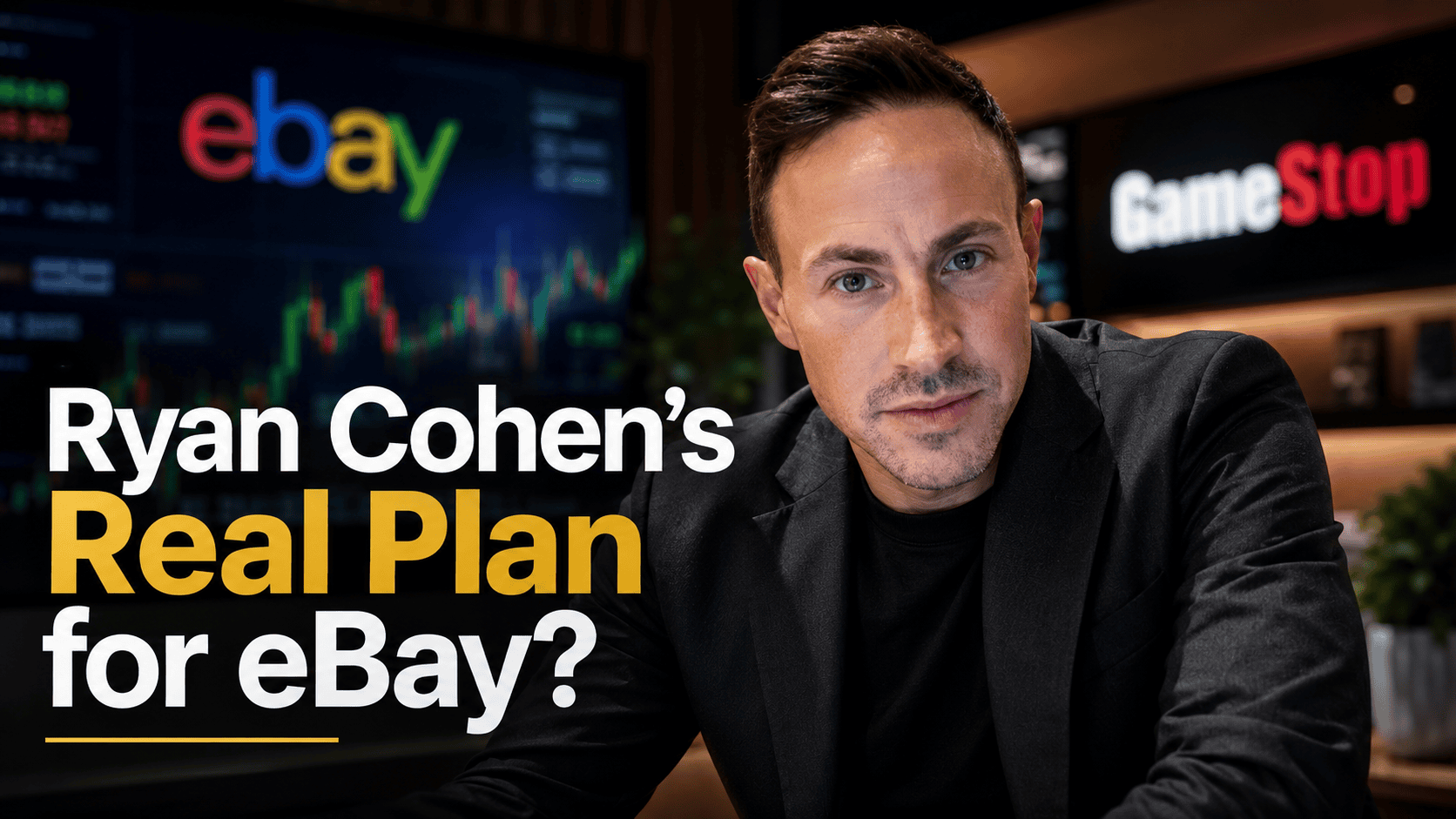
Could GameStop Transform eBay? What Ryan Cohen Revealed in His Latest Interviews
Over the past week, GameStop CEO Ryan Cohen went on a media tour that immediately triggered debate across Wall Street, Reddit communities, eCommerce sellers, developers, and the collectibles world.
Some investors called him visionary. Others described the interviews as vague, evasive, and financially unrealistic. eBay sellers began wondering whether GameStop was serious about entering the marketplace space in a much bigger way. Developers and third-party software companies quietly started asking another question almost nobody in the media is discussing:
If Ryan Cohen ever gains influence over eBay or builds a competing marketplace ecosystem, what happens to the seller tools, APIs, automation systems, and software infrastructure powering millions of online businesses today?
That question may ultimately become more important than the acquisition headlines themselves.
Because beneath the viral clips and billion-dollar speculation, Cohen’s interviews revealed something much larger than simply buying eBay. They revealed a possible vision of GameStop transforming into a modern commerce, collectibles, and marketplace infrastructure company.
The problem is that many of the most important operational details are still missing.
What Ryan Cohen Said on CNBC About eBay and GameStop
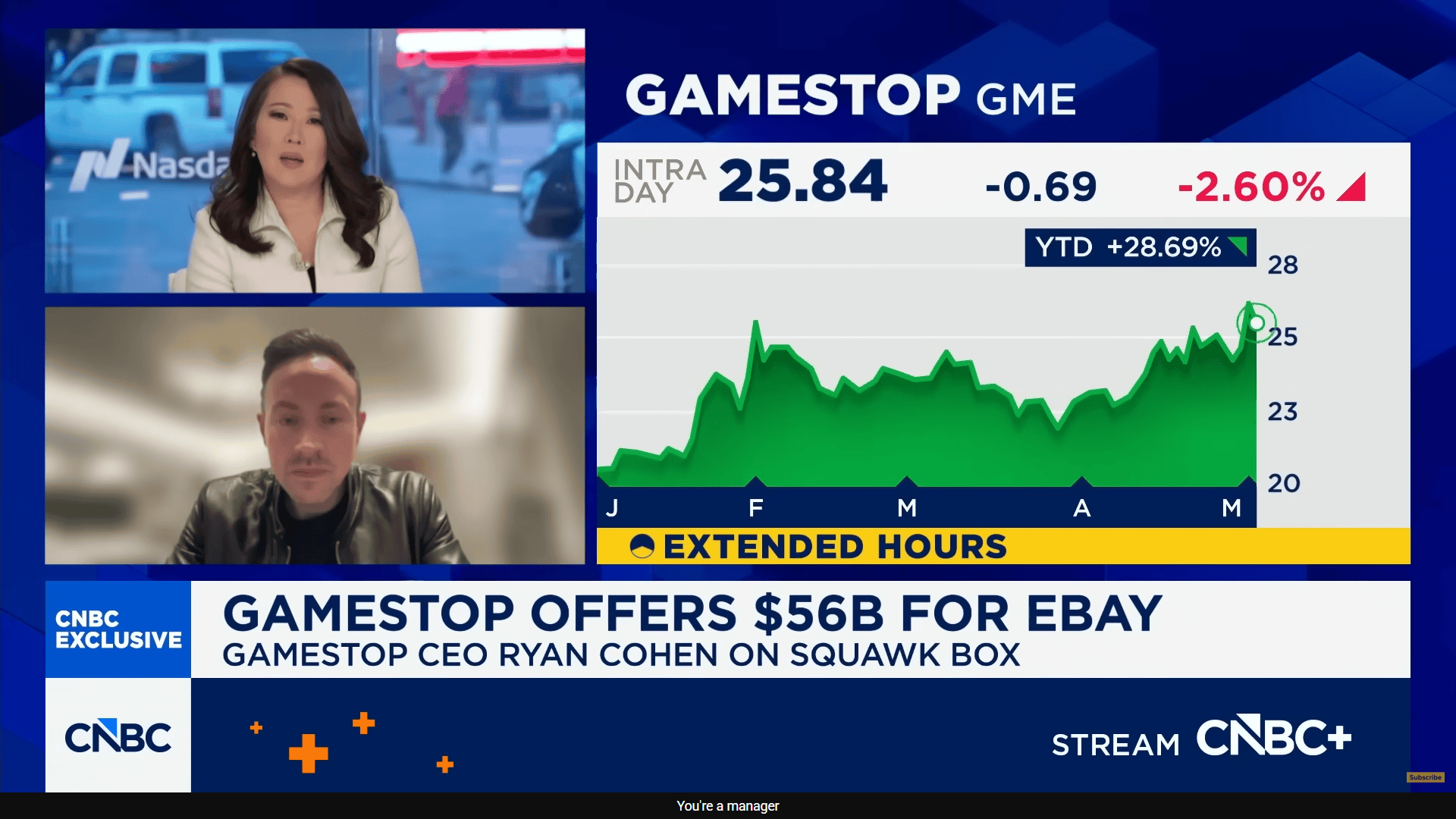
During an interview on CNBC Squawk Box, Cohen faced aggressive questioning about how GameStop could realistically finance a deal reportedly valued around $56 billion.
Interview link:
CNBC Squawk Box Interview
The CNBC hosts repeatedly pushed Cohen on the financing math, especially regarding cash reserves, stock issuance, and how GameStop could absorb an acquisition of that size without exposing investors to massive dilution or debt risk.
Instead of giving direct calculations on-air, Cohen repeatedly redirected viewers to GameStop’s website, saying the details were already publicly available.
That moment quickly exploded online because many viewers felt the explanation still lacked clarity.
According to reporting from Business Insider, the repeated “it’s on our website” response became one of the most discussed moments from the entire interview cycle.
But hidden underneath the awkward financing discussion was something more important.
Cohen repeatedly described eBay as operationally inefficient.
That was not accidental wording.
Throughout the interview, he kept returning to themes involving excessive spending, bloated operations, weak execution, and corporate inefficiency. That language strongly suggests Cohen believes eBay’s biggest problem is not revenue. It is operational discipline.
What Ryan Cohen Told Fox Business About the Future of Commerce
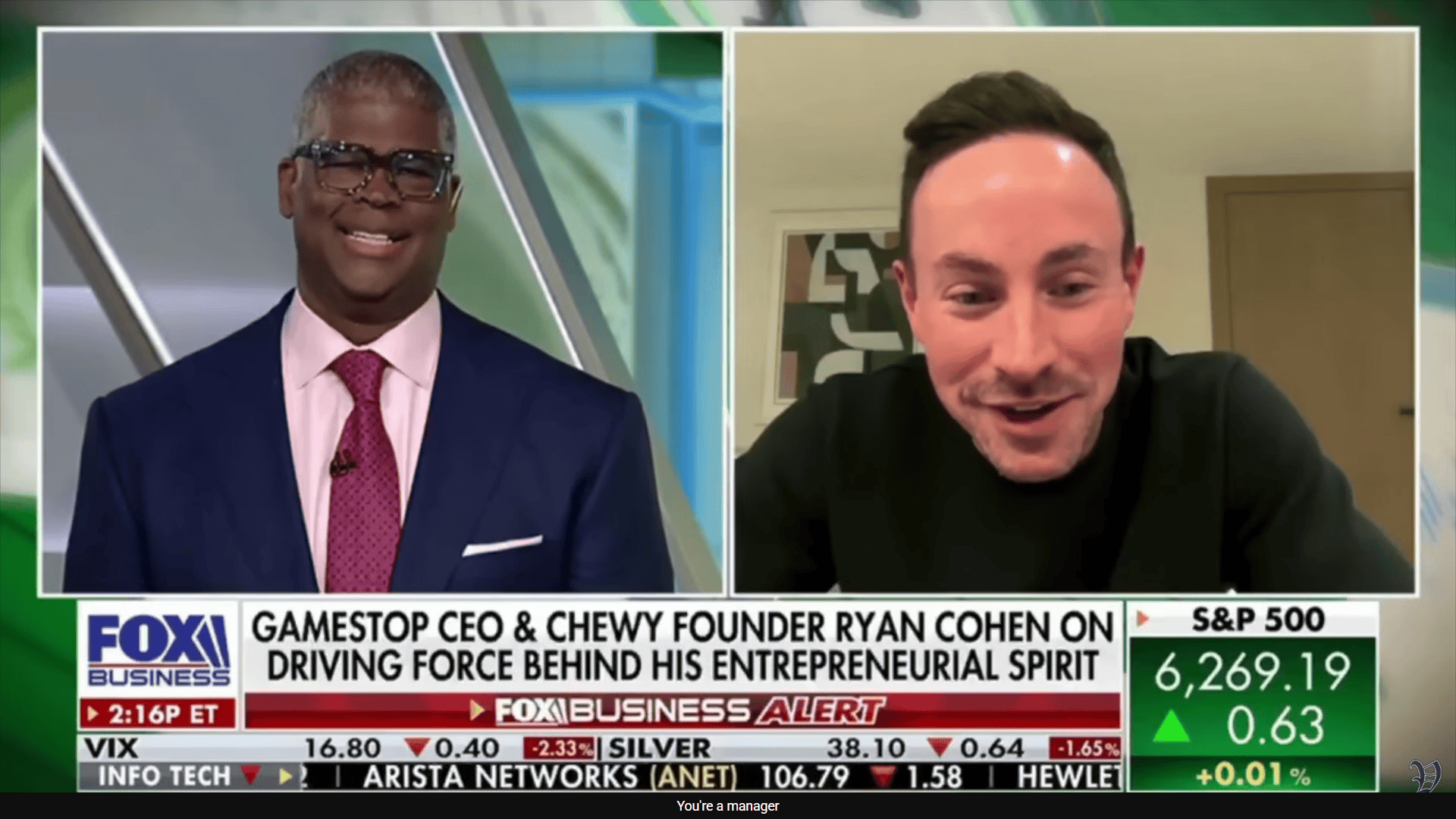
A few days later, Cohen appeared on Fox Business with Charles Payne.
Interview link:
Fox Business Interview
Unlike CNBC, where the focus centered heavily on financing mechanics, the Fox Business interview focused more on long-term strategy, entrepreneurship, shareholder value, and the future of commerce.
One of the most important parts of this interview was Cohen’s repeated emphasis on collectibles.
That detail may end up being the biggest clue about GameStop’s actual long-term ambitions.
Because realistically, GameStop is not going to out-Amazon Amazon.
But it may not need to.
If you combine GameStop’s retail footprint, gaming audience, trading cards, retro gaming, authentication services, enthusiast communities, live commerce, and marketplace liquidity, you suddenly have something much more realistic:
a specialized commerce ecosystem built around highly engaged buyers and sellers.
In other words, the interviews may have been less about turning GameStop into another Amazon and more about creating a hybrid between eBay, Whatnot, StockX, PSA, and TCGPlayer.
That theory aligns far more closely with what Cohen actually discussed publicly.
What Ryan Cohen Revealed on the TBPN Podcast
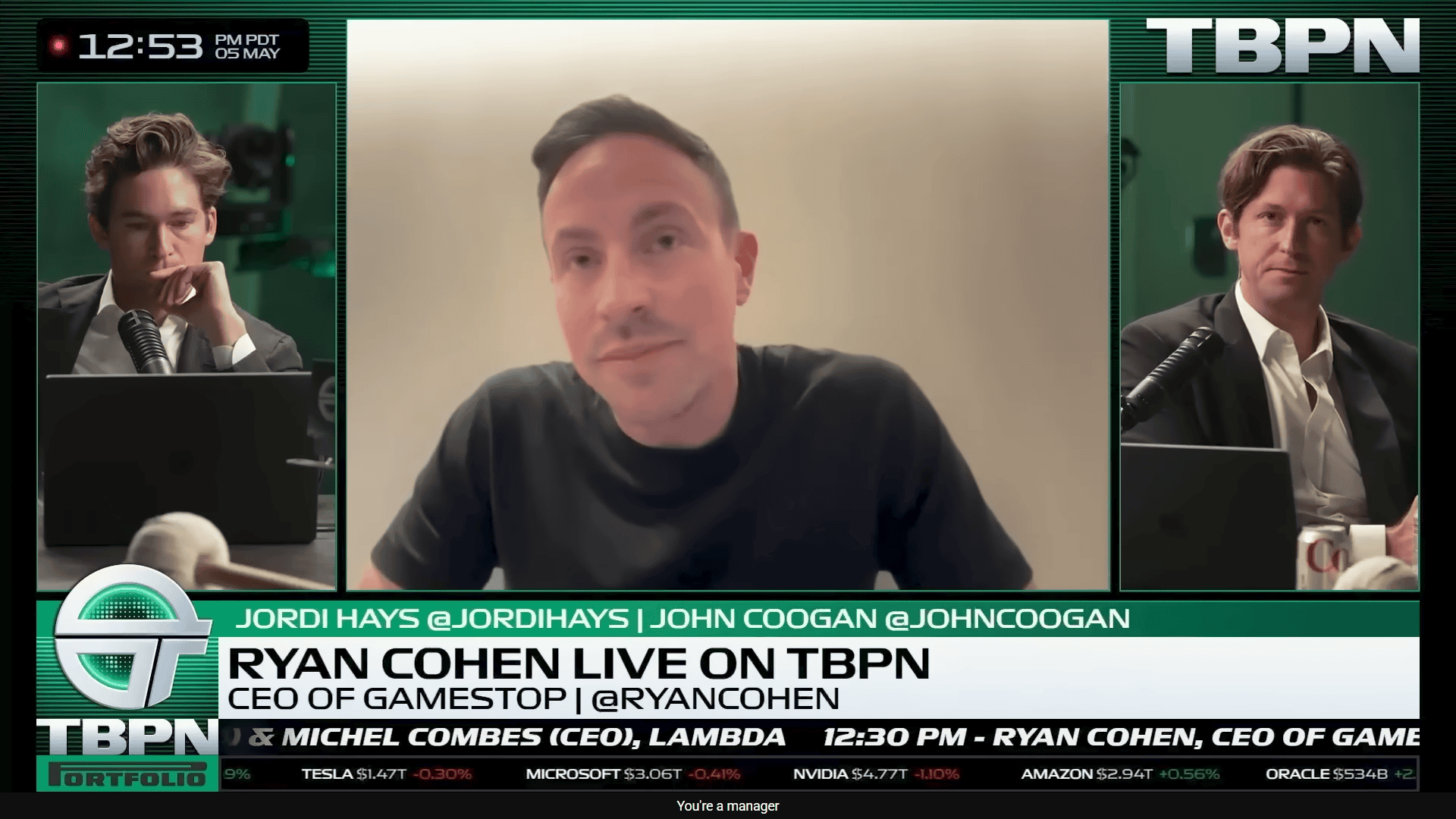
Later that week, Cohen appeared on The TBPN Podcast hosted by Jordi Hays and John Coogan.
Interview link:
TBPN Interview with Ryan Cohen
Unlike the CNBC interview, which focused heavily on acquisition financing and investor concerns, Jordi Hays and John Coogan pushed Cohen more on entrepreneurship, leadership philosophy, retail disruption, and how GameStop could evolve beyond traditional retail.
One of the most interesting moments from the interview came when Cohen discussed community-driven businesses and the importance of building highly engaged customer ecosystems instead of simply chasing scale for the sake of scale.
That distinction matters because it aligns much more closely with collectibles, enthusiast commerce, live selling, gaming communities, and creator-driven marketplaces than traditional mass-market retail.
Throughout the conversation, Cohen repeatedly emphasized speed, operational discipline, and eliminating corporate bureaucracy. However, he still avoided detailed explanations involving marketplace infrastructure, seller ecosystems, fulfillment systems, APIs, and third-party software integrations.
For marketplace operators, developers, and SaaS companies, that omission matters enormously.
Modern marketplaces are not just websites anymore. They are massive ecosystems connected through APIs, inventory systems, automation software, analytics platforms, AI tools, shipping integrations, and seller infrastructure.
Any major structural change involving eBay could eventually affect thousands of third-party businesses and millions of sellers.
That is why developers, eCommerce software companies, and high-volume eBay sellers should be paying close attention to these interviews even if they do not own a single share of GameStop stock.
The Biggest Questions Ryan Cohen Still Hasn’t Answered
Across all three interviews, one pattern became impossible to ignore.
Ryan Cohen repeatedly focused on operational efficiency, eliminating bureaucracy, customer experience, entrepreneurship, and lean execution.
But whenever the conversation shifted toward operational specifics, the answers became noticeably less detailed.
Questions involving marketplace infrastructure, seller ecosystems, API support, developer integrations, fulfillment logistics, and platform governance were either briefly addressed or avoided entirely.
That distinction matters because transforming a marketplace is very different from restructuring a retail company.
Modern marketplace ecosystems rely heavily on third-party software, inventory systems, APIs, automation platforms, analytics tools, AI integrations, and seller infrastructure.
For developers, eCommerce software companies, and high-volume sellers, those unanswered operational questions may ultimately matter far more than the acquisition headlines themselves.
Is eBay Undervalued Per User?
One of the most interesting financial questions raised by the interviews is whether Ryan Cohen believes eBay is undervalued on a per-user basis.
eBay currently has roughly 134 million active buyers globally. If Cohen were serious about a $56 billion acquisition, that would effectively value eBay at approximately $417 per active buyer.
At first glance, that sounds expensive.
But eBay generated more than $10 billion in annual revenue last year. That means each active buyer currently generates roughly $77 in annual revenue for the platform before considering future growth opportunities involving advertising, collectibles, authentication, payments, fulfillment services, and live commerce expansion.
From Cohen’s perspective, the argument may be that eBay’s user base is significantly more valuable than the market currently believes, especially if operational improvements increase profitability.
That may ultimately be the real financial thesis behind these interviews.
Not simply “buying eBay.”
But unlocking additional value from an already massive marketplace ecosystem.
Could Ryan Cohen Cut eBay’s Costs Significantly?
Another major topic barely discussed publicly is cost reduction.
Throughout the interviews, Cohen repeatedly hinted that eBay could operate much leaner than it currently does.
Some investors are already speculating that a GameStop-led restructuring could potentially target workforce reductions, marketing optimization, operational consolidation, fraud prevention improvements, logistics efficiency, and executive overhead reductions.
Texas would be the most obvious relocation possibility because GameStop is already headquartered there. Florida has also become increasingly attractive for companies seeking lower taxes, lower operating costs, and business-friendly environments.
There is currently no confirmation any of this would happen.
However, it would align closely with Cohen’s repeated criticism of excessive spending and operational inefficiency.
What a GameStop-eBay Future Could Look Like
For eBay sellers, this story matters far beyond stock-market headlines.
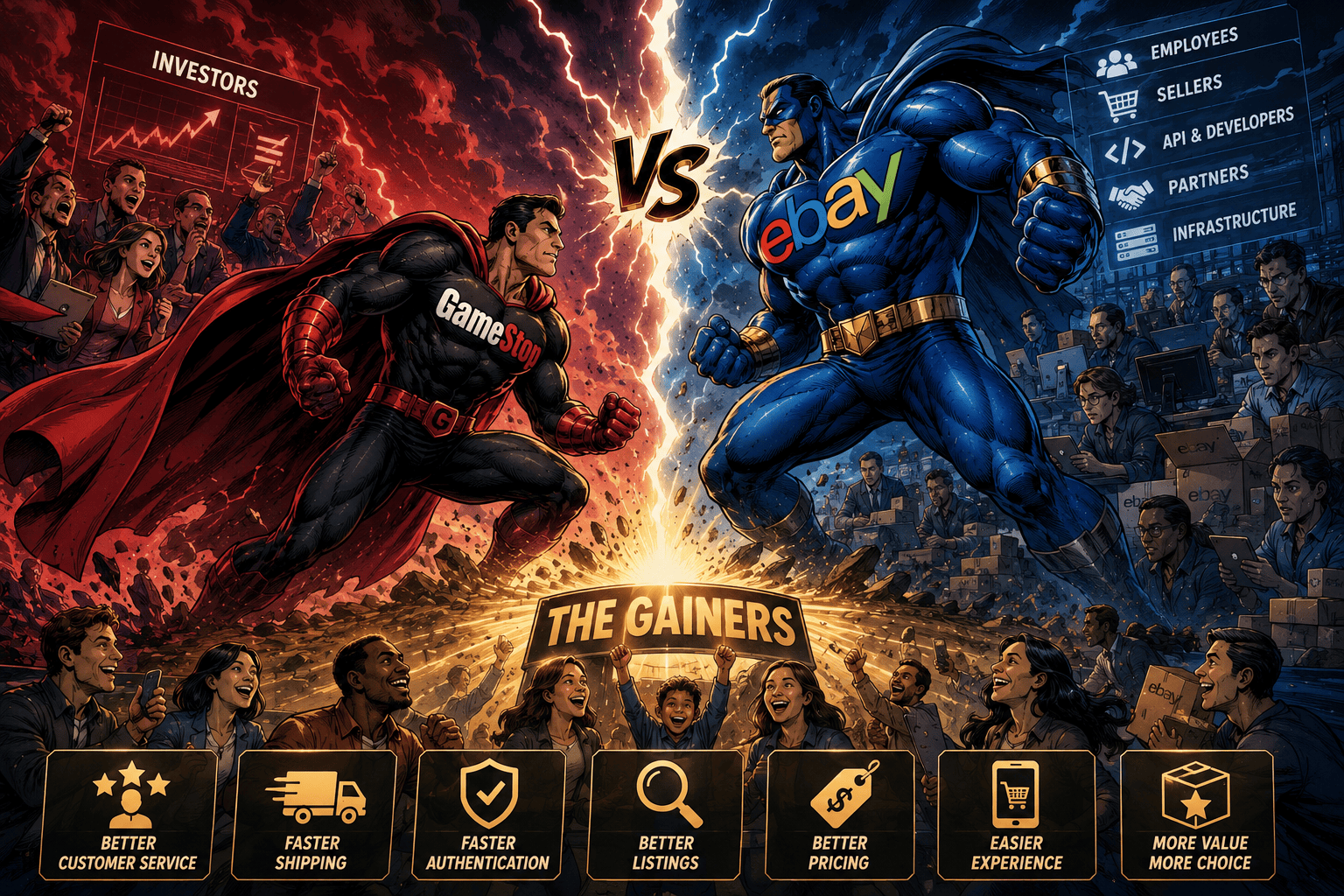
Because if GameStop expands aggressively into marketplaces, collectibles, authentication, or live commerce, sellers could eventually experience changes involving fees, visibility, APIs, live selling, authentication requirements, seller tools, and marketplace competition.
Collectibles sellers in particular should pay attention.
Trading cards, retro games, graded collectibles, and enthusiast categories appeared repeatedly throughout Cohen’s interviews.
That overlap with eBay’s strongest verticals is impossible to ignore.
Bullish vs Bearish: Why Investors Are Divided
The interviews also exposed one of the biggest divides currently surrounding Ryan Cohen himself.
Supporters see a founder trying to modernize outdated commerce systems, improve operational efficiency, and create long-term shareholder value through a stronger marketplace ecosystem.
Critics see vague financing explanations, unclear operational plans, meme-stock hype dynamics, massive integration risks, and overly ambitious projections.
Right now, both interpretations remain valid because so many critical details are still missing.
Final Thoughts
What is clear is that Ryan Cohen’s interviews were not simply about buying eBay.
They were about reshaping the conversation around what GameStop could become next.
And whether that future eventually involves eBay directly, a competing marketplace ecosystem, or a broader collectibles infrastructure strategy, the implications could eventually affect investors, sellers, developers, marketplace software companies, collectors, and the future structure of online commerce itself.
The biggest unanswered question is no longer whether Ryan Cohen wants to disrupt eCommerce.
It is whether he can realistically execute the vision he just hinted at publicly.

by Jack Blum
by Jack Blum
Get More eBay Seller Updates
Follow MyListerHub as a preferred source on Google and see more of our eBay seller news, guides, and industry updates.