Why Your eBay Listings Get Zero Impressions After 60–90 Days and What To Do About It
Learn why eBay listings hit zero impressions after 60–90 days and how large-catalog sellers diagnose decay, reset listings, and protect velocity.
February 19, 2026

eBay Listing Decay: Why Impressions Stop and How to Reset Them
You list the item properly. Strong photos. Clean structure. Item specifics filled. Competitive price. For the first few weeks, impressions look normal. Then, around day sixty, maybe day ninety, exposure slows. After that, it drops to zero. No impressions. No clicks. No activity. It feels like the listing disappeared.
This is where most sellers lose clarity. They assume demand died. They assume something broke. They assume they are being suppressed. But when you manage a large catalog, patterns matter more than emotions. If hundreds of listings follow the same timeline and stall between 60 and 90 days, that is not random behavior. It is a ranking decay.
Zero impressions is not a technical error. It is a competitive outcome.
In a catalog of 5,000 listings, even 10% decay means 500 SKUs are no longer competing. That is not a visibility issue. That is trapped capital.
Because this is an inventory management problem disguised as a traffic problem. If you have not built an aging inventory review system, read our eBay Sellers 2026 Playbook for Stale Listings.
What Zero Impressions on eBay After 60–90 Days Actually Means
Let’s draw a hard line. Zero impressions does not mean your account is flagged. It does not mean shadow-banning. It does not mean eBay is targeting your store. It usually means your listing no longer earns priority inside its search pool.
Search placement is competitive. Every listing competes for limited exposure. The system favors items that demonstrate recent engagement and a stronger likelihood of conversion. If your listing has not produced recent signals and other sellers introduce better-performing alternatives, your position erodes.
Age alone does not kill exposure. Lack of recent performance does.
The algorithm protects the conversion rate. Listings that have not converted or generated engagement are lower-probability bets. Lower probability listings receive fewer trials. Eventually, some receive none.
That is the operating reality.
Why Many eBay Sellers Misdiagnose Zero Impression
The first mistake is mass relisting. Sellers see zero impressions and immediately end hundreds of listings in one sweep. That feels productive. It is not controlled. It also distorts your daily listing rhythm and makes it impossible to isolate what changed.
The second mistake is price cutting before impressions return. If a listing is not being shown, reducing price does not solve the exposure problem. Price affects conversion, not visibility.
The third mistake is assuming demand disappeared. Often, competitors are still selling similar items. That tells you the market exists. Your listing simply lost competitive relevance.
Professional sellers separate emotional reaction from structural diagnosis.
What Happens Inside eBay Search When Listings Stop Getting Impressions
Most listings go through a momentum cycle. When first listed, they receive testing impressions. If they convert or generate watchers, they maintain position. If they do not, their exposure gradually decreases as stronger listings outperform them.
At the same time, new inventory enters the category every day. Fresh listings receive testing priority. Sellers with recent sales history maintain a stronger ranking weight. Promoted listings capture additional visibility.
Your older listing becomes statistically weaker in comparison. By the 60 to 90-day window, many non-performing listings have completed their testing phase. Without new signals, exposure dries up.
In dense categories such as sneakers, electronics, and automotive parts, this decay occurs more quickly because competition is constantly refreshing. In thinner categories, the drop may reflect buyer pool exhaustion. Either way, zero impressions is a data point, not a mystery.
How to Diagnose eBay Listings With Zero Impressions Before You Relist
Before touching the listing, validate the market. Search the primary keyword manually. Are comparable items still selling? Are there new listings appearing daily? If yes, demand exists.
Next, check whether your listing ever had traction. If it never generated impressions from the start, the issue is likely structural. Title alignment, category placement, and pricing tier may have been mispositioned from day one. If it had impressions early and then declined, you are dealing with competitive erosion.
Then evaluate category density. If hundreds of similar listings compete at similar prices, ranking decay is normal. If the category is thin and impressions remain at zero, demand may be saturated.
Different root causes require different responses. Do not skip this step.
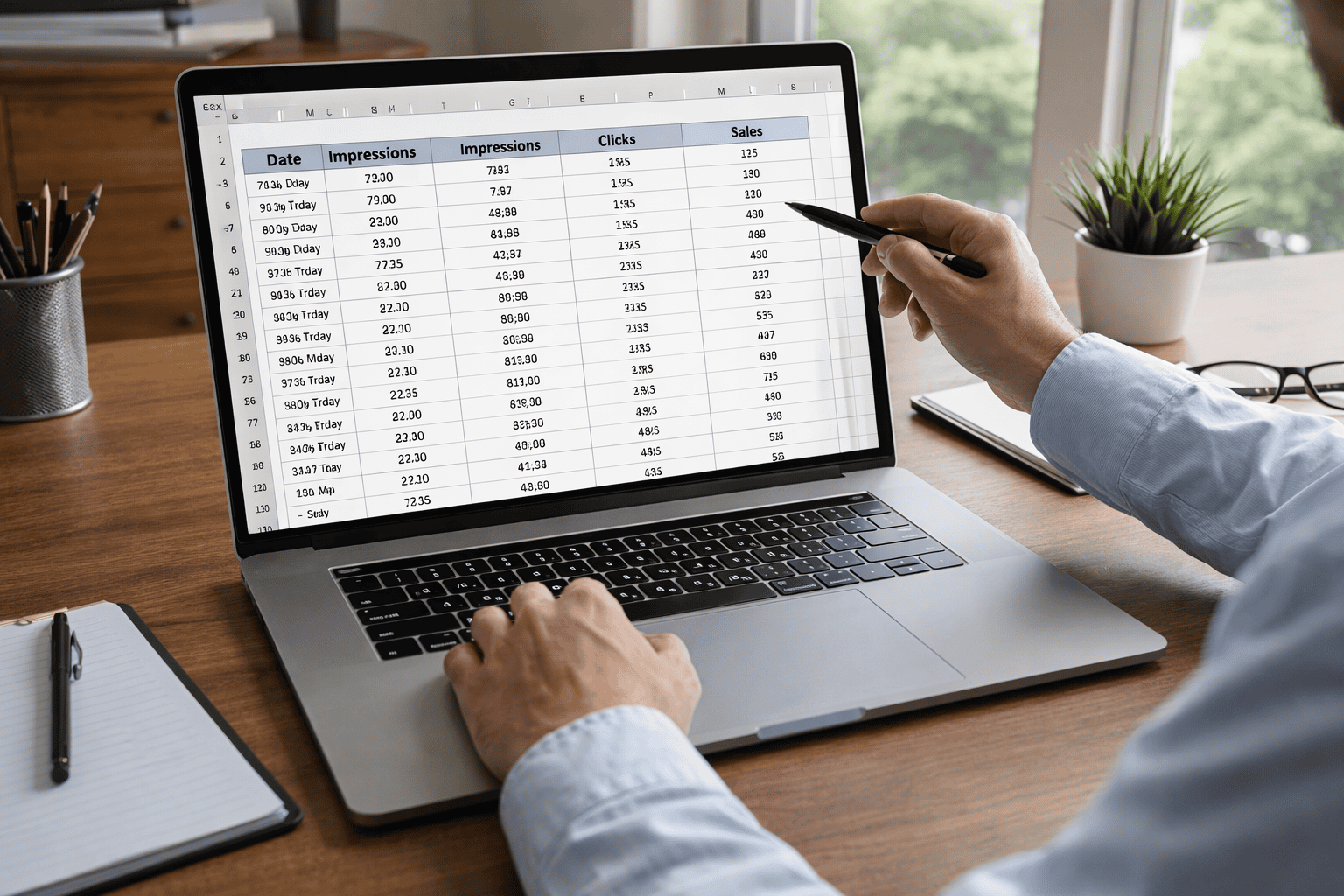
The Right Way to End and Relist eBay Listings Without Disrupting Your Daily Listing Volume
If the market is active and competitors are converting, a reset can work, but it must respect your operational capacity. The goal is not to relist large chunks of inventory at once. The goal is steady, controlled reintroduction.
Your relists should fit within your normal daily listing pace. If you list around twenty items per day, you do not end and relist two hundred aging listings in one shot. That overwhelms workflow and removes clarity around what changed. Instead, treat relists as part of your regular listing cycle.
End and relist gradually. One at a time, or spaced out at intervals. If you use a relisting tool, configure it to stagger actions so listings are refreshed over time rather than simultaneously. This preserves control and prevents artificial spikes in catalog churn.
When you relist, change one primary variable. Adjust title structure. Modify the main image angle. Reposition pricing relative to first-page results. Or test promotion rate. Do not change everything at once.
Then measure for fourteen days. That window captures two full buyer cycles and allows the system to retest placement. If impressions return but clicks stay low, your presentation does not match search intent. If impressions and clicks improve but sales do not, pricing or offer structure is off. If impressions remain zero, your SKU is uncompetitive at its current tier.
Because impressions without sell-through do not build velocity. For a deeper look at performance metrics, read our Common Mistakes & Myths Debunked: Why Your eBay Listings Still Aren’t Getting Views
The Hidden Risk of Zero-Impression Listings in Large eBay Catalogs
Large catalogs amplify small inefficiencies. If fifteen percent of five thousand listings stop receiving impressions, that is seven hundred fifty stalled assets. Even modest average selling prices turn that into meaningful capital sitting idle.
Professional sellers build 60-day audits. Pull zero-impression reports. Segment by category. If one category shows heavy decay while others remain stable, investigate competitive density, pricing compression, and promotional intensity inside that segment.
The goal is not to rescue every listing. The goal is to protect catalog velocity and capital rotation.
When Promoted Listings Are the Real Reason Your eBay Impressions Disappear
In some categories, zero impressions reflect promotional displacement rather than decay. If competitors aggressively increase promoted listing rates, organic exposure can shrink dramatically.
Before restructuring titles or pricing, test a moderate promotion increase on a small subset for fourteen days. If impressions return quickly, you have identified a paid visibility gap. The decision becomes financial. Does the increased fee still allow acceptable margin?
Do not apply blanket promotion increases across the entire catalog without reviewing contribution margin. Visibility that erodes profit is not growth.

When to Stop Fixing a Stale eBay Listing and Redeploy the Capital
Some listings will not recover. Even after structured relisting, controlled testing, and reasonable promotional adjustments, a SKU may still receive zero impressions. At that point, continuing to invest labor may not make sense.
Capital tied up in dead inventory has an opportunity cost. High-volume sellers win by efficiently rotating capital. Sometimes, liquidation, bundling, or cross-platform movement is the correct move.
Optimization is not loyalty. It is capital management. For clarity on deciding between optimization and exit, read how to Optimize Stale Listings on eBay: Proven Tips to Boost Visibility and Sales
The 60–90 Day Decision Point: Reset, Optimize, or Exit
Zero impressions after 60 to 90 days is a checkpoint. You either ignore it and allow decay to spread quietly across your catalog, or you treat it as part of structured inventory management.
Build a 60-day review rhythm. Diagnose before reacting. Relist within your daily capacity. Test one variable at a time. Measure impressions, clicks, and conversions separately. Exit inventory that fails structured retesting.
Visibility is not permanent. It is continuously earned. Large-catalog sellers who accept that reality protect their margins and their momentum.
Common Questions Sellers Ask About Zero Impression eBay Listings
Why do my eBay listings suddenly get zero impressions after 60–90 days?
Because the initial testing exposure has expired, and the listing failed to maintain competitive engagement signals. The system reallocates visibility to higher-converting or recently active inventory.
Should I end and relist all zero-impression listings at once?
No. Relisting beyond your normal daily listing capacity distorts workflow and makes performance data unreliable. Controlled relisting inside your existing daily volume keeps testing clean.
Does lowering the price fix zero impressions?
Not directly. Price influences conversion after impressions exist. If a listing is not being shown, visibility must be restored before pricing becomes relevant.
Are zero impressions a sign my account is suppressed?
In most cases, no. It reflects competitive ranking decay, not account-level restriction. The issue is listing performance inside its category, not store-level punishment.

by Ran Oz
by Ran Oz
Get More eBay Seller Updates
Follow MyListerHub as a preferred source on Google and see more of our eBay seller news, guides, and industry updates.