How eBay Sellers Have Expanded Their Businesses in 2025 Thanks to MyListerHub
Learn how top U.S. eBay sellers scaled in 2025 using automation, smarter pricing strategies, and data-driven listing optimization to boost visibility and sales.
November 15, 2024

How Top U.S. eBay Sellers Scaled in 2025: The Automation Strategies, Misconceptions, and Real-World Lessons Behind Their Growth
Online commerce continues to evolve rapidly. More sellers have entered the marketplace. Buyers compare listings more carefully before making a purchase. eBay now rewards consistency, freshness, strong item specifics, and daily seller activity more than ever.
Yet in this competitive landscape, thousands of U.S. sellers found a way not only to survive, but to grow. Their success did not come from lucky breaks or gimmicks. It came from working smarter, and letting automation, analytics, and AI handle the repetitive tasks that drain time.
If you reached this guide while searching for help diagnosing why your eBay listings suddenly stopped getting views, you may want to jump to our in-depth visibility breakdown here: Why Your eBay Listings Still Aren’t Getting Views
This guide focuses on the strategies top sellers used to scale in 2025 and beyond.
1. The Quiet Shift in eBay Selling: Manual Work Was Slowly Killing Growth
If you have sold on eBay long enough, you recognize the warning signs. Listings that used to generate steady views begin slowing down. Items that sell weekly lose visibility. Some products sit untouched for months, no matter how strong the inventory is. You adjust titles, tweak prices, and send offers, yet nothing changes.
This decline is not personal. It is structural.
eBay now measures freshness, recent activity, accurate item specifics, consistent behavior, and reliable listing cycles. Sellers relying on manual work struggle to maintain those signals. The sellers who grew realized something crucial. Their time and attention were the bottlenecks. Visibility required a system, not sporadic effort.
Instead of asking how to work harder, they asked how to keep their store moving even when they were not.
A practical guide on how automated refresh cycles restore visibility and stabilize impressions: How to Use eBay Automation to Refresh Old Listings and Increase Sales
2. Challenge #1: Listing Fatigue, the Silent Killer of Visibility
Stale listings became one of the most damaging obstacles for sellers. Once a listing sits long enough without activity, impressions drop sharply. The product no longer matters. If buyers cannot see it, it cannot sell.
Sellers tried traditional fixes. Some ended all listings at once. Others edited titles lightly or lowered prices randomly. Many copied competitor titles, hoping visibility would return. These inconsistent actions often sent weak signals to eBay's algorithm.
The sellers who overcame this issue adopted a structured refresh cycle. MyListerHub’s automation ended and relisted stale items at controlled intervals, not in large batches. This consistent flow of activity created healthier engagement signals. Sellers who embraced Sell Similar cycles saw visibility return steadily.
One Florida jewelry seller increased impressions by more than thirty percent after switching entirely to automated refresh cycles. His click-through rate improved as well, and conversions followed naturally.

A deep dive into why listings go stale and how to revive them with proven refresh techniques: Optimize Stale Listings on eBay: Proven Tips to Boost Visibility and Sales
3. Challenge #2: Pricing Pressures, Competing Without Losing Profit
Pricing remains one of the most challenging balancing acts in eBay selling. High prices reduce visibility. Low prices destroy margins. Many sellers believe competitor repricers are necessary to stay competitive. In truth, repricers often cause chaotic price swings, margin erosion, and unpredictable signals, all of which hurt visibility.
Sellers who scaled adopted a steadier approach. They used MyListerHub’s dynamic pricing tool, which adjusts prices on a consistent schedule instead of reacting to competitors. This created predictable listing activity that eBay rewarded without dragging the seller into price wars.
A Texas auto-parts seller saw impressions increase by nearly 30% after replacing manual repricing with scheduled dynamic adjustments. His profit margin remained strong, and his visibility stabilized.
Explains how modern pricing automation improves visibility and protects profit: Why Every eBay Seller Needs a Smart Pricing Tool
4. Challenge #3: The Multitasking Burnout Problem
Every U.S. eBay seller eventually encounters the same issue. The business grows faster than the available hours in the day. Sellers suddenly become photographers, copywriters, shippers, negotiators, analysts, and inventory managers. Burnout becomes almost inevitable.
The sellers who scaled learned that growth does not come from taking on more tasks. Growth comes from removing the tasks that slow you down.
MyListerHub automated relisting, pricing updates, stale cleanup, message responses, offer negotiation, shipping label generation, follow-up messages, description templates, and even listing creation itself through Cavio AI. Once these tasks moved off the seller’s to-do list, they regained hours every day. Sellers then used that time for high-value work such as sourcing inventory, improving photos, and tightening fulfillment workflows.
Their growth came from eliminating bottlenecks, not adding effort.
Shows how message automation and structured communication reduce workload and increase conversions: Improve Customer Communication on eBay and Increase Your Sales with MyListerHub
5. Challenge #4: Sellers Did Not Know What Was Working Until They Saw the Data
Instinct has always played a role in selling, but instinct alone is no longer enough.
Before analytics dashboards, sellers relied on guesswork. If impressions dropped, they assumed it was price. If views slowed, they blamed the title. If sales fell, they assumed the product lost demand.
Once sellers used MyListerHub’s analytics, they discovered the truth.
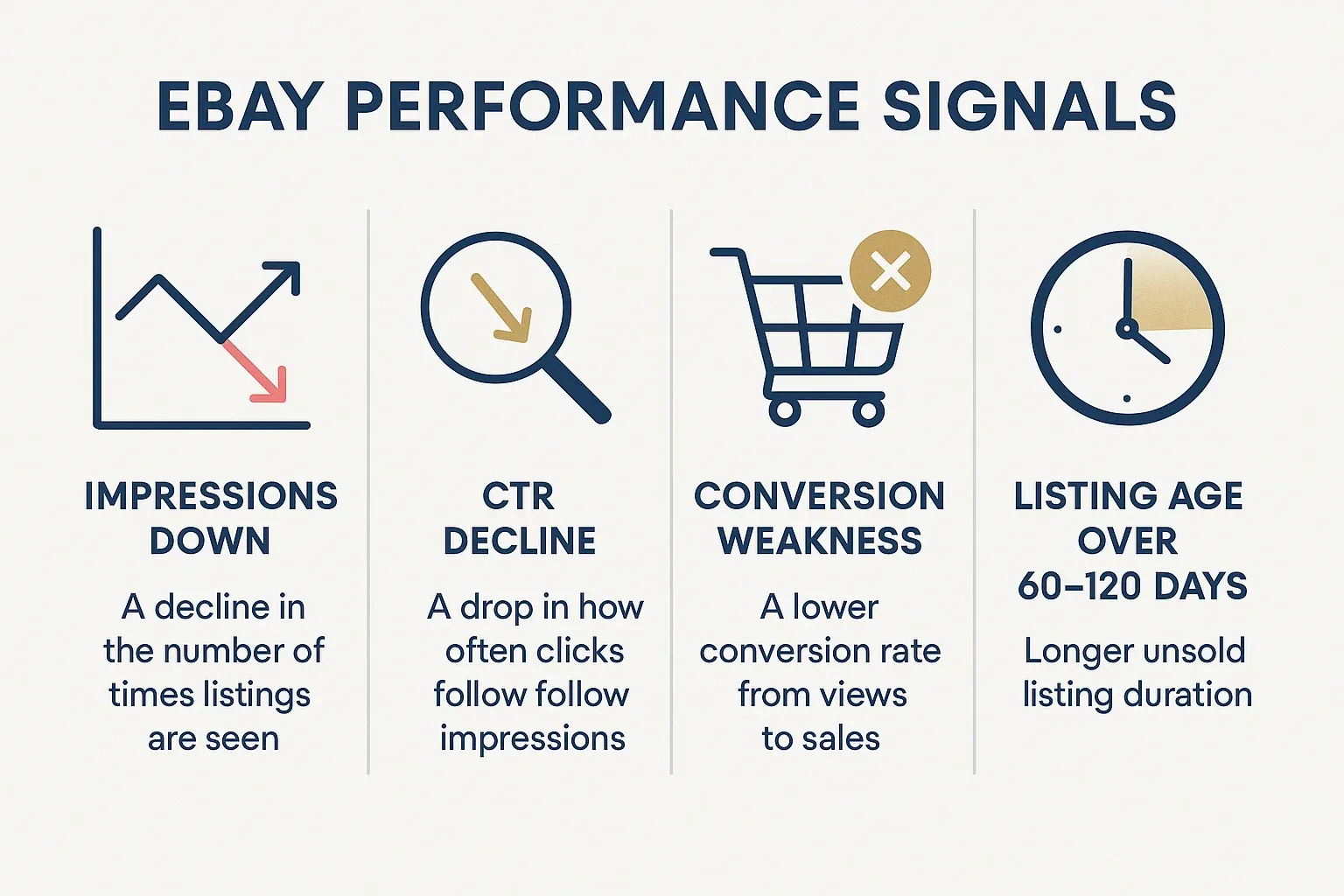
Falling impressions usually pointed to stale listings that needed Sell Similar.
Declining click-through rates usually point to image or pricing issues.
Weak conversions almost always pointed to descriptions, item specifics, or buyer trust issues.
Data turned confusion into clarity. Sellers no longer guessed. They understood exactly which listings needed action and why.
6. The Tools That Drove Seller Growth in 2025
When sellers embraced automation and data, the tools they used made a dramatic difference.
Cavio AI transformed photos into complete listings. MyListerHub’s stale-listing cycle kept every item fresh. Dynamic pricing added controlled activity. Automated offer management handled buyer interactions instantly. HTML templates boosted trust. Shipping label workflows eliminated repeated steps. Feedback follow-ups increased reputation. Multi-store management prevented duplicate listings and maintained structure across larger operations.
Each tool saved time. Together, they built a reliable, scalable system that helped sellers grow consistently instead of reactively.
To learn more about our features, visit our eBay tools page at www.mylisterhub.com/ebay
7. Misconceptions That Held Sellers Back
- Refreshing listings once a month is enough
- Competitor repricers are essential
- Editing a title counts as listing freshness
- Buyer messages must always be answered manually
- A strong product will eventually sell without activity
8. Real U.S. Sellers, Real Results in 2025
- A Florida jewelry seller increased impressions by 34% and saved several hours each day
- A Texas auto-parts seller increased visibility by 29% while protecting margins
- A California fashion seller raised conversion rates by 18% using Cavio AI and professional templates
9. The Road Ahead for U.S. eBay Sellers
Sellers who grew did not find shortcuts. They built systems that performed every day. Automation handled repetitive work. Analytics guided decisions. AI reduced listing time. Professional templates earned buyer trust.
Modern eBay selling rewards consistency, clarity, and efficiency. Sellers who follow these principles will continue to grow as the marketplace evolves.
Common Questions Sellers Ask
How can eBay sellers keep listings fresh and avoid visibility drops in 2025?
You can keep eBay listings fresh by using a structured Sell Similar cycle and automated stale-listing refreshes. eBay rewards consistent activity signals, and long-tail keywords combined with accurate item specifics help stabilize visibility. Sellers relying on manual edits often see impressions decline, while automated refresh cycles maintain stronger visibility over time.
What are the most effective automation tools for eBay sellers in 2025?
The most effective tools include automated stale-listing refreshes, dynamic pricing based on set intervals, and AI-driven listing generators like Cavio AI. These tools reduce manual workload, improve listing freshness, and support long-tail keyword optimization. Sellers who automate these processes typically achieve higher impressions and stronger conversion rates.

by Jack Blum

by Jack Blum
Get More eBay Seller Updates
Follow MyListerHub as a preferred source on Google and see more of our eBay seller news, guides, and industry updates.