Selling Auto Parts Locally vs. on eBay in 2025 (What Most Sellers Never Calculate)
Compare the true cost of a local auto parts store vs selling on eBay in 2025. See hidden expenses, real profit drivers, and a clear roadmap to add eBay as a second channel.
November 19, 2025
Local Auto Parts Store vs. eBay: True Costs, Profit Scenarios, and the New Way to Scale in 2025
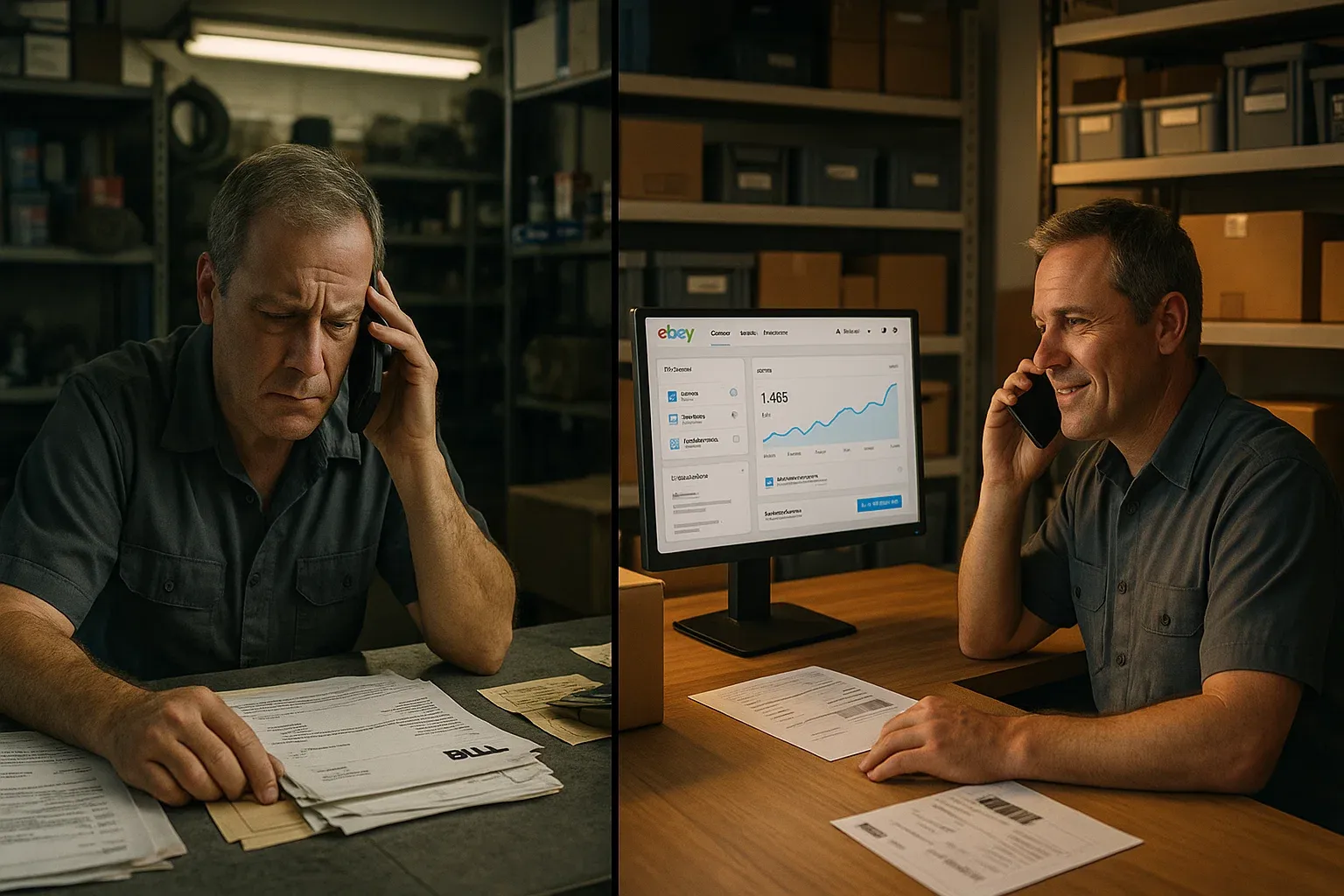
If you run an auto parts business, you already know what a “busy” day looks like. The counter is full, phones are ringing, someone is yelling a part number across the room, and you have a tech on hold who needs that one rotor or sensor right now. On days like that, it feels like the business is strong and profitable.
The problem is that feeling and reality are not always the same thing.
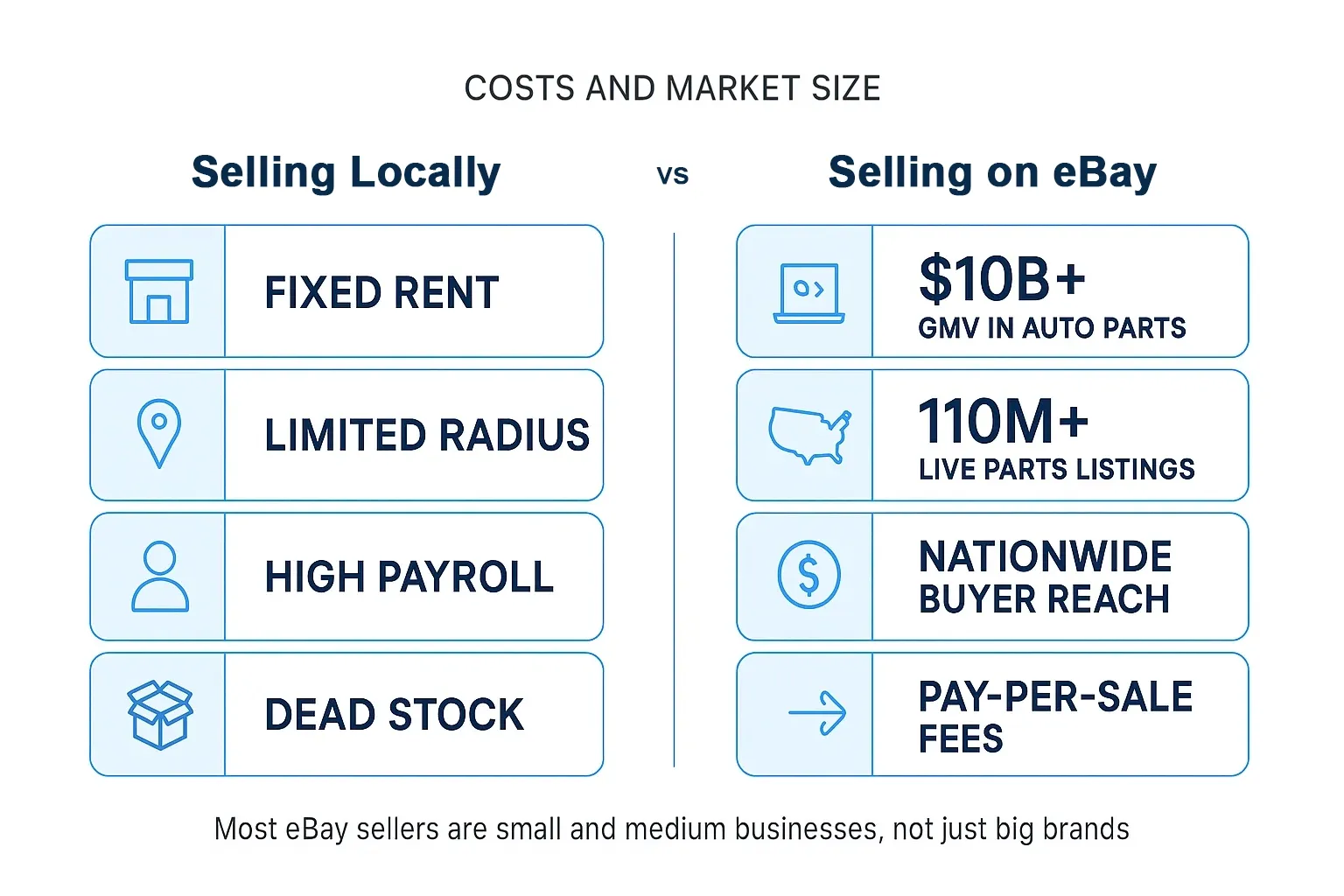
Over the last few years, eBay has become the number one marketplace for auto parts and accessories. eBay Motors Parts and Accessories alone generate more than $10 billion in annual GMV, and auto parts represent one of the strongest verticals on the entire platform. While many local-only shops are fighting to keep the lights on, eBay is quietly moving millions of parts a day for sellers who decided to treat online as a serious channel, not a side experiment.
This article is not about theory. It is about what it really costs to run a local-only auto parts business compared to running an eBay operation, and why the businesses that combine both are the ones that will survive the next five to ten years.
eBay Auto Parts Market: 2024 By The Numbers
Before we talk about strategy, it helps to know what kind of machine you are plugging into.
Across the entire marketplace, eBay generated about $75 billion in GMV in 2024. Global reports for 2024 and early 2025 show roughly 135 million active buyers, around 18 million active sellers, and roughly 2.5 billion live listings at any given time. This is not a small side marketplace. This is a full-blown retail ecosystem.
Inside that ecosystem, eBay Motors Parts & Accessories is their biggest engine. Official export and category pages repeatedly confirm that P&A generates over $10 billion in GMV every year, that roughly 1 in 3 eBay buyers purchase parts and accessories, and that about 3 auto parts or accessories are sold every second in the United States. Multiple sources also converge on the same scale number: about 110 million live auto parts and accessories listings on eBay Motors at any given moment.
In other words, if you stack your shelves and compare them to what is already online, your local stock is a drop in a very big ocean.
When you look at seller size, most of that ecosystem is driven by small and medium-sized businesses; around 80 percent of eBay sellers are small businesses, and only about 4 percent qualify as very high volume “power sellers”.
So when you think about “who you would be competing with” online, the picture is not a few giant corporations pushing you out. The picture is tens of thousands of small and mid-sized sellers, just like you, who decided to use eBay as the second half of their business instead of relying only on walk-in traffic and phone calls.
Why Local Only Feels Successful, Even When It Is Not
If you spend all day behind a counter, your brain starts to measure success based on activity. Cars in the lot, people at the counter, phones ringing, shelves getting restocked. It feels alive. It feels like money.
The problem is that you rarely stop to calculate how much dead stock you are carrying, how many calls never convert, how many “I will come back later” conversations never come back, and how many times you cut your price at the counter just to avoid losing the sale. You do not see the lost opportunities because those buyers never reached you in the first place. They went online, found the exact part on eBay, and bought it from someone who is already playing in the bigger arena.
Inside your four walls, it is very easy to confuse motion with profit.
The Hidden Costs That Eat Local Auto Parts Profit
A local store does not just cost rent and salaries. It quietly drains money out of the business in ways that rarely show up in a quick mental calculation.
Rent is the obvious one. A retail location on a busy street can easily run eight to twelve thousand dollars a month, and even “cheap” commercial space is often four to seven thousand. Before you open the door, you may need fifteen or twenty average tickets just to pay the landlord.
Then there is slow-moving inventory. Every seller has shelves of parts that “should move” but simply do not. Maybe the application is too rare in your city, or maybe the cars that need it have aged out of your local market. On eBay, that same part has the entire country or even the entire world as a buyer pool. Locally, it becomes dead weight.
Your buyer radius is limited. Most of your customers live within a few miles. A handful will drive twenty or thirty miles for a rare part, but the vast majority will not. That means you might have the exact right part for a car three states away and absolutely no way for that buyer ever to know you exist.
Labor is another quiet leak. You need counter staff, phone staff, someone to manage receiving, someone to run the front, and often someone in the back to keep the chaos under control. All of them are on the clock, whether you sell one part or fifty today. Add utilities, insurance, waste, theft, shop supplies, and suddenly those busy days do not look as profitable as your gut feeling told you.
On top of that, local returns are messy. People show up with no receipt, damaged boxes, or parts that were installed and then removed. They say “it did not fit” even if it did. You end up taking back items you cannot resell easily, just to avoid a scene. That is not an eBay policy problem. That is a local reality problem.
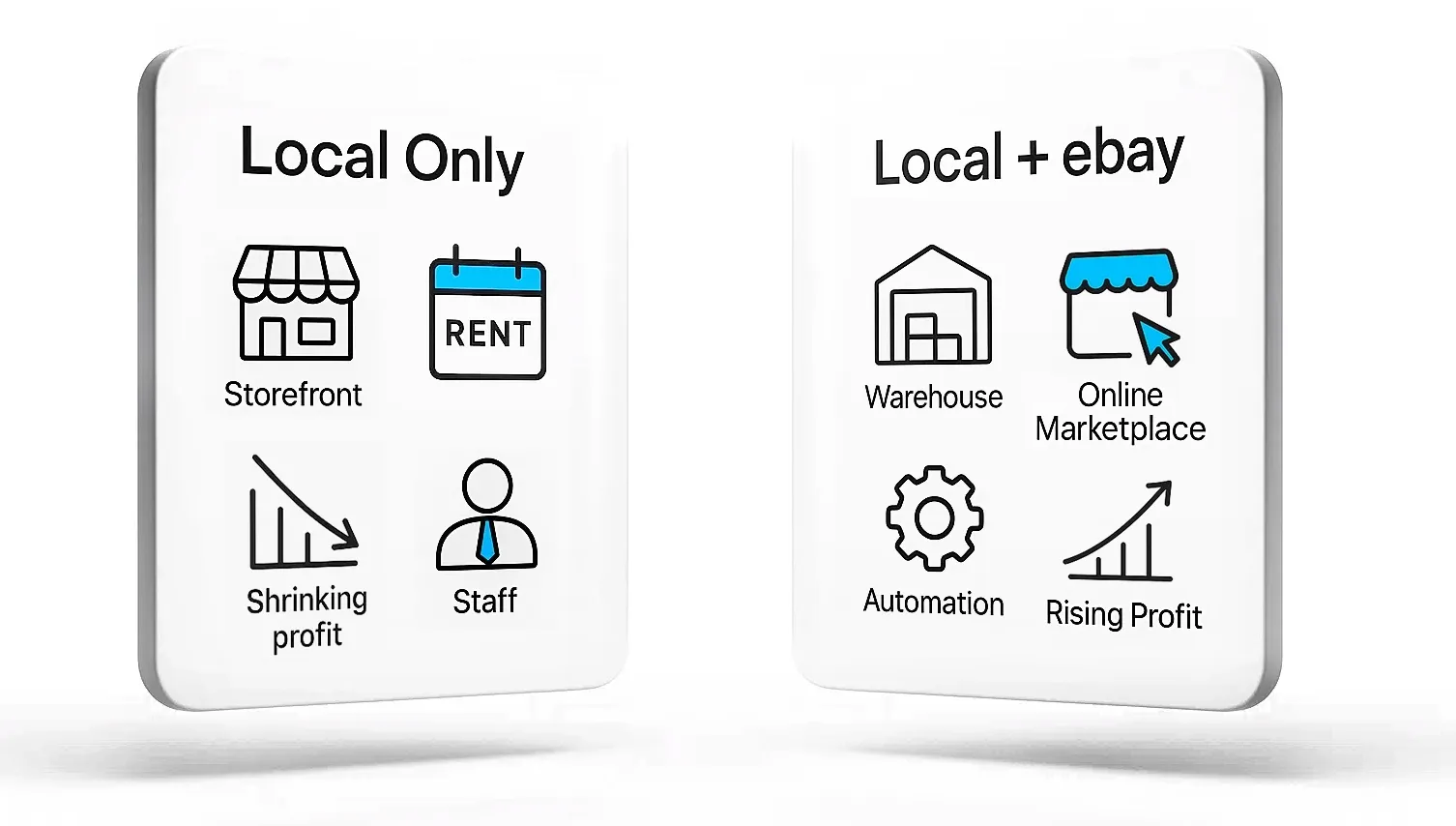
Local Store Economics vs eBay Economics
If you strip the emotion out and look only at how money flows, the difference is pretty simple.
A local store burns money every day, no matter what. Rent, utilities, payroll, and local advertising have to be paid whether you sell a single alternator or not. Every extra square foot you occupy adds cost, every extra hour you stay open requires staff. Your business model relies on enough people walking through the door or calling in to keep that machine paid for.
On eBay, the economics flip. You do not pay to keep a digital “door” open. You do not pay to have 5,000 or 20,000 listings sitting there ready for the right buyer. You pay fees only when a sale actually happens. Auto parts and accessories already generate over $10 billion in GMV on eBay in 2024 and about to double it in 2025, so there is no question about whether demand exists. The only question is whether your inventory is part of that movement, or not.
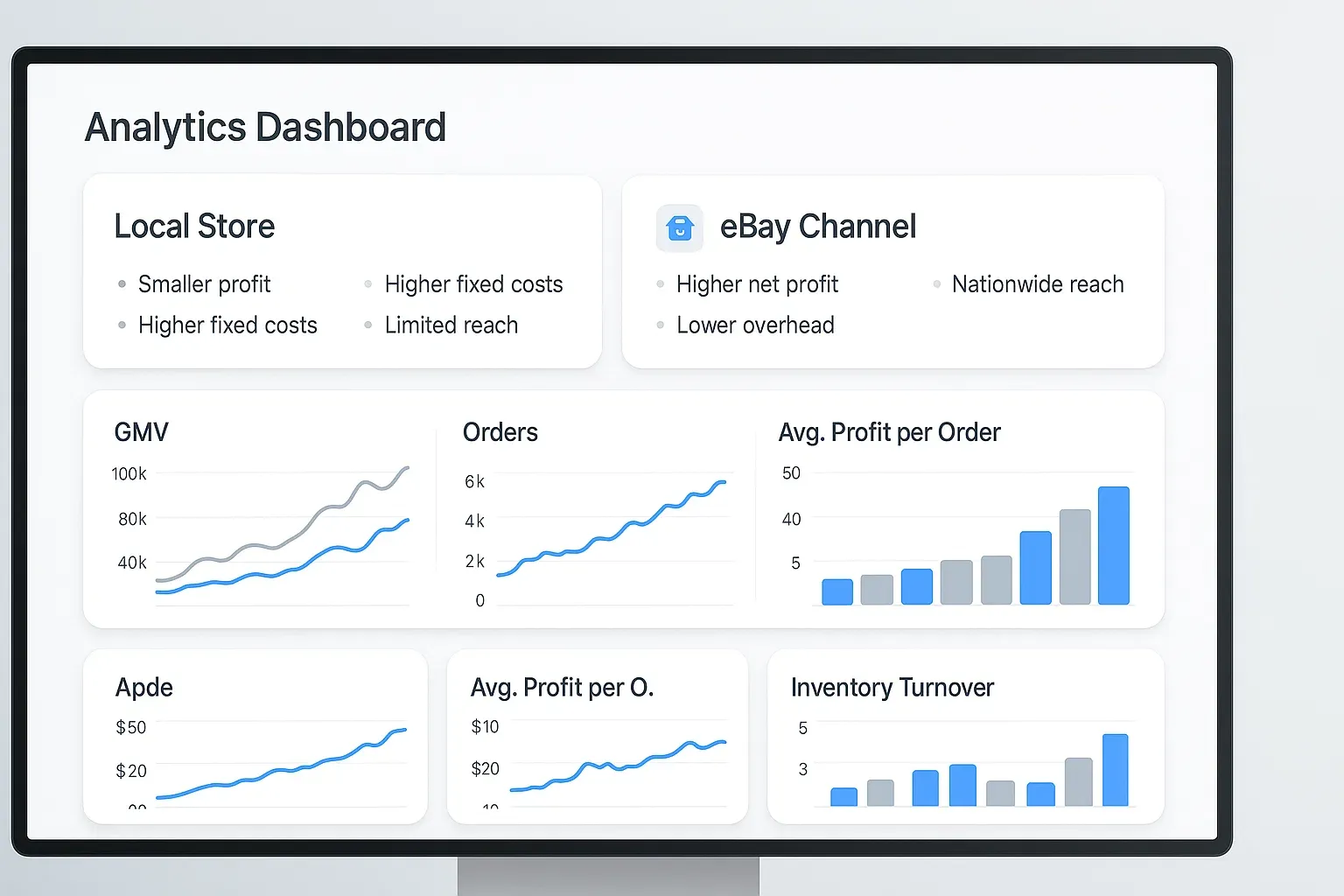
For most businesses, once you subtract rent, extra payroll, local marketing, and the cost of carrying dead stock, the true net margin per part is simply better online.
Local Employees vs Remote VAs
This is where a lot of sellers underestimate eBay.
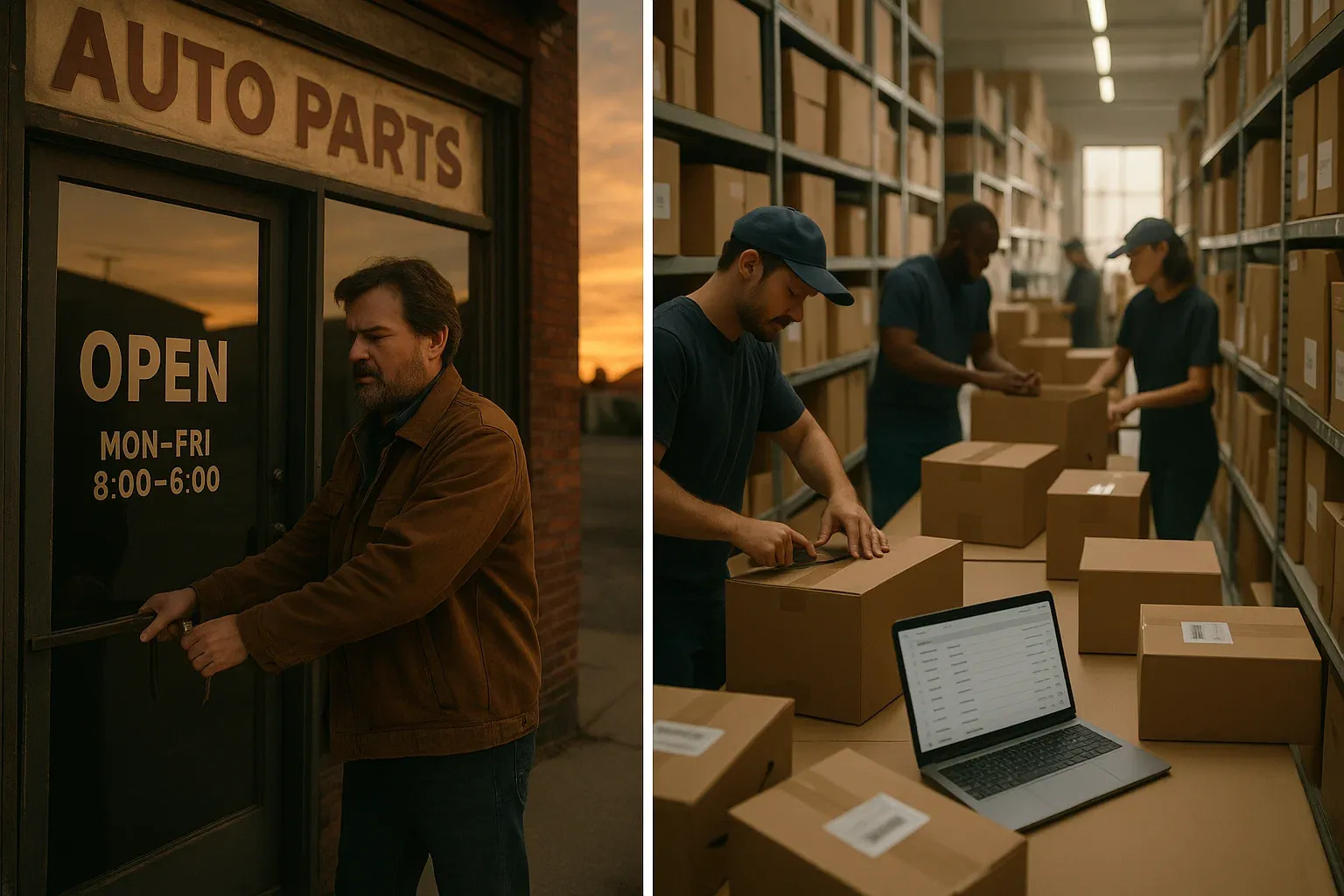
Local employees are expensive and inflexible. By the time you pay eighteen to twenty-five dollars per hour, plus payroll tax, insurance, and other overhead, every staff member is a serious commitment. They also can only work when the store is open, and their time is often split between customer service, looking up parts, dealing with returns, and putting out day-to-day fires. Perfectly good people end up doing low-leverage work because the physical store demands it.
A remote VA or remote team works differently. For six to ten dollars per hour, you can have someone list parts, maintain fitment, respond to eBay messages, process orders, and coordinate shipping. They can work at night while your local operation is closed. They can handle hundreds of SKUs per week from a spreadsheet. Combined with a tool like MyListerHub, a single VA can handle the listing and maintenance work of several in-store employees, since the software handles much of the repetitive work.
You are not replacing your best counter person. You are shifting the quiet, data-heavy tasks into a remote workflow that costs less and scales better.
Sales Rep Commissions vs eBay’s No Commission Model
In the local world, you pay staff and sales reps whether they close a sale or not. You might run spiffs, bonuses, or commissions for certain lines. You pay for their time when they spend 15 minutes answering questions for someone who walks out empty-handed. You eat the discounts your staff gives away at the counter to “save the sale.”
On eBay, there is no internal commission structure. The platform does not charge you extra when your staff answers questions. It charges a final value fee when an order is completed. That is it. There is no need to create complicated commission plans or worry about staff cutting prices just to pad numbers. Your “sales reps” become your titles, photos, fitment, and your ability to show up when someone searches that part number.
You stop paying people to try to sell and start paying a marketplace only after it actually sells.
Busy Street Store vs Warehouse in a Cheaper Area
Many auto parts shops still treat a busy street location as a badge of honor. Big sign, main road, expensive corner. That made sense when walk-in trade drove everything. Today, that same location often becomes an anchor.
When most of your future customers are finding parts online, the real asset is not your street visibility. It is your ability to receive, store, list, and ship efficiently. That is what a cheaper warehouse gives you: lower rent, more space, easier loading, and far fewer interruptions. You can still keep a smaller front counter or a showroom if you like, but the heavy lifting of your revenue can come from racks in a less glamorous part of town instead of paying thousands extra just to be seen by people driving by.
The difference between a $12,000 retail location and a $3,500 warehouse is a huge chunk of yearly profit, especially once eBay becomes a serious sales channel.
Local Ads vs eBay Ads
Local advertising has become a gamble. Google Local Service Ads, Google search for “auto parts near me,” Yelp ads, print, radio, and random sponsorships all cost money, whether they work or not. The cost per real customer is high and getting higher. You might spend hundreds or thousands a month just to keep the phone ringing.
eBay advertising is different. Promoted Listings and other ad tools take a small percentage only when the item sells. You are not paying for views that never convert or calls that go nowhere. You set an ad rate, the listing gains extra visibility, and you pay the fee only after money hits your account. With auto parts and accessories, you are riding demand that already exists on the platform, not trying to force people in your neighborhood to suddenly think about brakes today.
Local ads are a cost center. eBay ads are a profit percentage that rides on top of existing demand.
Google Reviews vs eBay Feedback
Keeping a perfect Google rating is exhausting. One unreasonable customer, one competitor with a fake review, or one bad day can drag down your average. You then spend months asking customers to leave reviews to bury the bad ones. It becomes a second job. On top of that, Google does not always verify that the reviewer actually did business with you.
On eBay, feedback is tied to real transactions. Only buyers who completed a purchase can leave a rating. There is a path to adjust unfair feedback. Defects age out over time. If you ship quickly, describe accurately, and handle issues like a professional, positive feedback accumulates naturally as your volume grows. When you add MyListerHub-style message automation that sends follow-ups and thank-you messages, even more buyers leave positive comments without you having to ask.
You move from begging for local reviews to letting marketplace feedback grow as a side effect of doing your job well.
Revenue Limits vs Unlimited Demand
A local store has a hard ceiling defined by population and drive time. If fewer people move into your area, construction changes the traffic pattern, or a big chain opens closer to the center of town, your revenue ceiling drops, and there is not much you can do about it without physically relocating.
On eBay, your reach is not tied to your ZIP code. You sell in all 50 states. You tap into international buyers who desperately need certain U.S. parts. You connect with niche communities and rare vehicles that do not exist in your neighborhood. For many sellers, the SKUs that feel “dead” locally turn into some of their best-performing inventory online because the right buyers simply were never nearby.
There is no meaningful ceiling beyond how many parts you list and how well you run your operation.
Store Hours vs 24/7 Sales
Your local store might be open eight or ten hours a day. Your eBay store is open 24/7/365. Orders come in when you are eating dinner, sleeping, or closed for a holiday. Buyers in different time zones and countries place orders at times that have nothing to do with your local schedule.
For a lot of sellers who finally commit to eBay, the most surreal moment is checking their phone in the morning and realizing they already sold enough while they slept to pay part of that day’s bills.
Shelf Space vs Digital Shelf Space
In a physical store, every part takes up room. The more inventory you carry, the more shelves, racking, climate control, and labor you need. If a part does not sell, it still costs you money every month just by existing inside that building.
On eBay, listing another hundred, thousand, or ten thousand SKUs does not cost space. There is no extra electric bill for having more listings. You can still run a lean warehouse in a cheaper area while your digital “shelves” expand as far as your data and your photos allow.
That is one of the biggest mindset shifts. The limit is no longer how many shelves you can fit. The limit is how organized and serious you are about getting your catalog online.
Shipping: Local Hassle vs Predictable Workflow
Local sales often create messy logistics. Customers ask if you deliver. Some say they will swing by and never show. Others want you to hold parts for days. Returns appear with no record in the system beyond someone’s memory. All of that eats time and energy.
On eBay, shipping is structured. Buyers pay shipping. Addresses are validated. Labels are generated from within the platform. UPS or USPS pickup is scheduled. With a tool like MyListerHub, you can generate and print labels for many orders in one go. It becomes a simple daily routine: pick, pack, print, ship. Issues still happen, but they are documented and tracked rather than handled in memory and on sticky notes.
We Are Not Saying “Close Your Store And Fire Your Staff”
At this point, it is important to be very clear. This article is not telling you to lock the door, fire everyone, and move your entire business into a dark warehouse overnight. Local still matters. Walk-in customers still matter. Phone relationships still matter.
What we are saying is that relying only on local is dangerous in 2025 and beyond. The better model for most auto parts businesses is both. Keep your local presence if it makes sense. Keep your best counter people. Keep the customers who have been with you for years. But at the same time, give eBay a real chance as a second, serious sales channel.
Most small and medium-sized businesses that use online marketplaces do not abandon their core business. They layer eBay and other platforms on top of what they already do, using modest investments in data, staff, and tools to unlock new revenue streams without shutting down the old ones. The goal is not to replace your store. The goal is to stop leaving money on the table by pretending that local demand is the only demand that matters.
The Cost Of Doing Nothing
Every month you do nothing, inventory ages. Shelves fill. Rent goes out. Local traffic slowly shifts as more people get used to pulling out a phone instead of calling around town. AI-powered search and recommendation systems keep steering buyers toward marketplaces with the most data and options. That is precisely what platforms like eBay are becoming for auto parts.
The honest risk is not that your business collapses tomorrow. The risk is that by the time you finally decide to take eBay seriously, your best competitors have already built strong feedback, strong fitment data, and strong buyer habits. Catching up to that head start is much harder than starting now while the field is still open.
Where To Go From Here
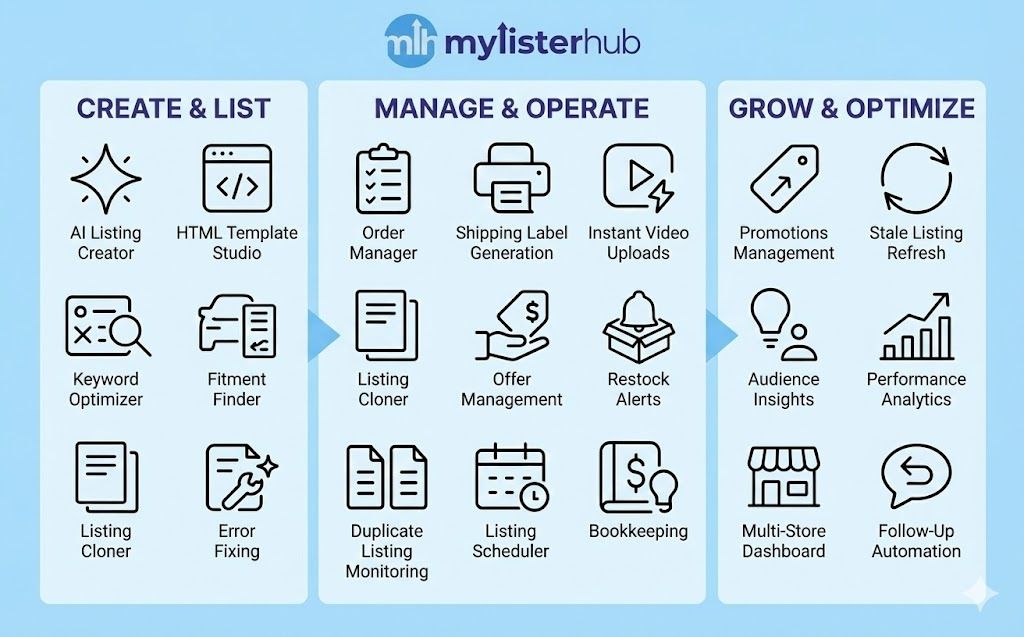
If you have never sold on eBay, the most practical path is to treat it like a pilot project, not a side hobby. Start with a few hundred SKUs that make sense: higher margin items, slower-moving inventory, and parts that are easy to ship. Either clean up a CSV export from your existing system or start taking photos in bulk and let a tool like MyListerHub’s AI handle the heavy lifting of titles, descriptions, and item specifics.
You do not need your entire catalog online to see if eBay works. 200-500 listings are enough to prove demand, stress test your shipping workflow, and get your first wave of feedback and repeat buyers.
For more information about titles, search ranking, and listing refresh strategy in plain language, you can read How to Get More People to View Your eBay Listings
If you already sell on eBay and feel your store is underperforming, it can help to step back and let someone else review the numbers. Our Store Assessment process is designed to surface exactly where your impressions, click-throughs, or conversions are leaking:
If stale listings are a known problem for you, or your store has been sitting with the same inventory for months without much movement, our guide on Optimizing Stale eBay Listings goes deep into how listing age and activity impact visibility and how to rotate stock in a smarter way.
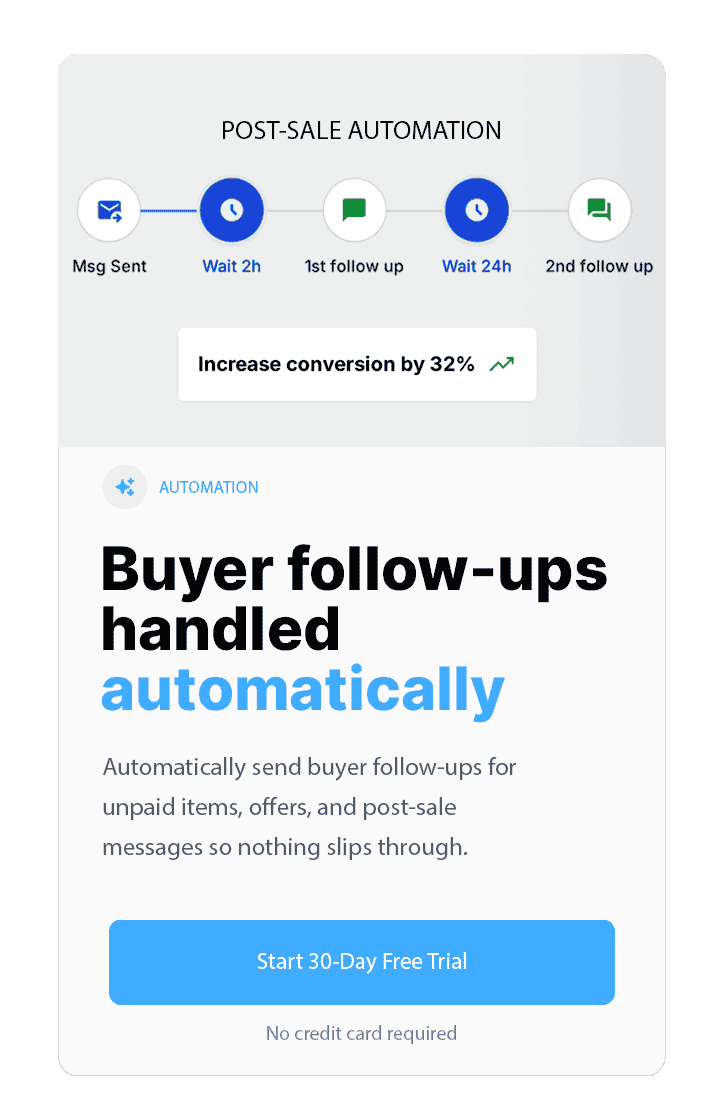
Once you are seriously considering scaling, not just testing, automation becomes crucial. To see what is possible on that side, you can read 30 Powerful eBay Follow-Up Message Automations That Drive More Sales on eBay, and learn how simple follow-ups and reminders can increase conversion and feedback without extra manual work.
And if you are wrestling with how to set prices for online sales versus local, our article How to Price Your eBay Listings breaks down pricing formulas and strategy in a way that works for car parts, not just random consumer goods.
Common Questions Sellers Ask:
Is eBay really more profitable than a local parts store?
In many cases, yes. Once you subtract rent, heavy payroll, local advertising, and the cost of dead stock, and compare that to eBay, where you pay fees only when something sells, the net profit per part often looks better online, especially for slow movers and niche parts.
Do I have to shut down my local store to win on eBay?
Absolutely not. The strongest model for most sellers is both. Keep your local operation if it works, and add eBay as a second serious channel. Use your store for same-day customers and eBay for everyone who will never walk through your door.
How many SKUs do I need to make eBay worth it?
You do not need twenty thousand SKUs to prove the model. Most serious sellers see clear results starting with 200-500 parts if they are picked strategically and listed correctly with good fitment and photos.
How to manage auto parts shipping and returns on eBay?
Shipping becomes a routine once you set up your carriers and workflows. Once your buyer makes a purchase, the MyListerHub system verifies the shipping address, automatically generates labels, uploads them to ebay, and sends a message to your customer with tracking and delivery details. When a customer processes a return, the system documents it, and if you receive multiple returns for a specific item, it gives an alert to update your description and images.

by Jack Blum
by Jack Blum
Get More eBay Seller Updates
Follow MyListerHub as a preferred source on Google and see more of our eBay seller news, guides, and industry updates.