The Best Software to List and Sell Auto Parts on eBay in 2026
Discover the best eBay auto parts listing software for 2026. Learn how automation, AI fitment tools, and MyListerHub help eBay Motors sellers list faster, fix fitment mistakes, and sell more with higher margins.
December 5, 2025

Automation, AI, and Productivity: What Auto Parts Sellers Need to Win on eBay
If you sell auto parts on eBay, your problem usually is not inventory.
Your problem is everything that happens between a part sitting on a shelf and a part arriving in the right car.
Listing, fitment, pricing, messages, returns, and shipping all pile up. Most sellers already feel the drag in their day.
The answer is not “use more tools”. Many auto parts sellers are already juggling a yard system, a catalog tool, a generic multichannel app, and eBay Seller Hub. The real question for 2026 is much simpler:
Do you have one platform that genuinely understands auto parts on eBay, or are you trying to force software that was built for a different era into that job?
This article is about how to fix that, not about beating yourself up for past choices. We’ll look at what is broken in most setups, what the “best software” actually needs to do now, and where MyListerHub deliberately fills the gaps.
Why Your Current Auto Parts Software Keeps Letting You Down
Most sellers are not starting from zero. They usually fall into one of a few camps.
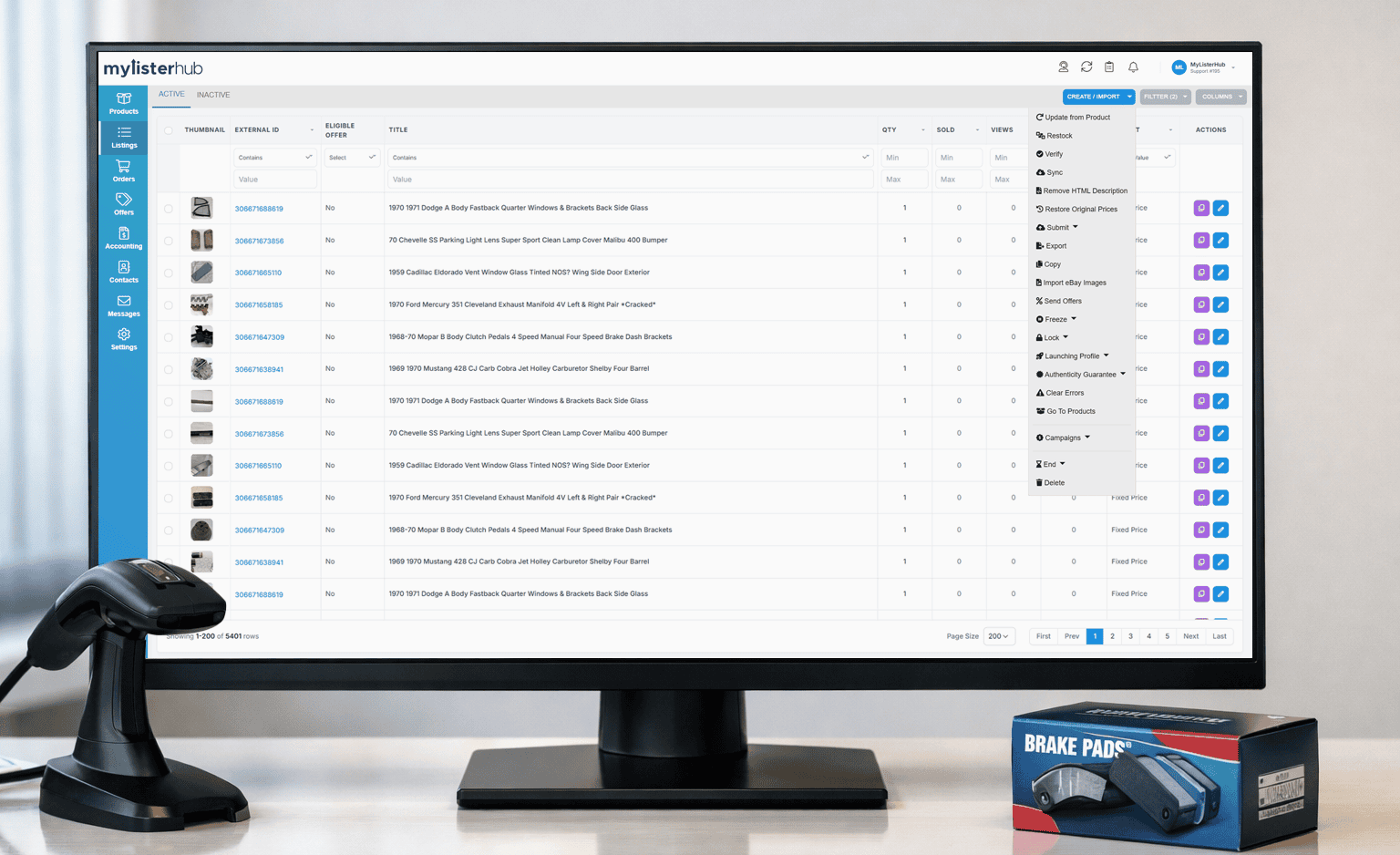
Some started with a yard or recycler system that does a great job tracking vehicles, bins, tags, and interchange, then bolted an eBay export on top.
Some signed up for a dealer-style platform that lives and breathes OEM catalogs and DMS connections, but gets awkward the moment you try to list used or aftermarket parts.
Others picked a generic multichannel tool that treats brake rotors and hoodies as the same type of SKU.
On paper, all of these “support eBay.”
In real life, you see the same patterns:
eBay is treated as an output channel, not the main battlefield. Fitment is something you attach at the end, if at all. Price, listing age, and returns have no real logic behind them. You still live in spreadsheets and manual edits, even though you are paying for software.
The tools are not evil. Most of them were simply designed for a different primary job: running a yard, running a dealer website, or syndicating a clean catalog. Your reality is an eBay Motors store with messy, mixed inventory and constant change.
What eBay Auto Parts Sellers Look Like in 2026
Auto parts sellers on eBay are no longer one character.
One seller might be parting out hundreds of vehicles a year and selling used OEM. Another is a franchise dealer moving new factory parts and branded accessories. Someone else is an aftermarket distributor with multiple brands and private labels. You have performance and tuning shops, wheel-and-tire specialists, rebuilders, and side hustlers flipping parts from project cars.
Plenty of businesses are hybrids. A recycler who also stocks new aftermarket. A dealer who occasionally lists used take-offs. A shop that runs multiple eBay stores to separate brands or niches.
Any tool built for only one of those profiles will eventually feel too small. You do not need a museum piece that once worked for someone else. You need something that respects how you actually sell today.
To understand why eBay should be your primary growth channel instead of a side project, read:
Why Every Auto Parts Business Should Be Selling on eBay - it breaks down real marketplace demand, buyer behavior, and why auto parts and accessories are still one of the most profitable categories on eBay.

The Fitment Problem Nobody Really Solved Yet
Most tools will tell you they “handle YMM”. In reality, everyone is working inside the same constraints.
All serious auto parts platforms pull from the same ecosystem of vehicle databases and parts catalogs. They feed on formats like ACES and VCdb, then transform that into Year, Make, Model, engine, and trim compatibility for marketplaces.
The limitations are baked in.
Marketplaces limit the number of vehicle combinations you can attach to a single listing. If a part fits thousands of vehicles, you are forced to split or compromise. Catalog data is created and maintained by humans. It goes out of date, it contains mistakes, and it does not always handle weird edge cases like “fits only with tow package” or “fits non-US models only”. New model years show up every year. If nobody maintains the coverage, your fitment quietly rots.
Most tools treat this as a black box. They show you a long list of vehicles, but they do not tell you where the data came from, how reliable it is, or when it was last updated. If a buyer says “did not fit”, you are left guessing whether the error was in the catalog, the listing, or the buyer.
That is the first thing that has to change.
A modern eBay-first platform for auto parts cannot just “pipe in” fitment. It has to make fitment visible, explainable, and connected to the rest of your business logic.
If you want a deep dive into real-world fitment mistakes and how they blow up your returns and feedback, read: Where Most Auto Parts Sellers Get Fitment Wrong on eBay – and How to Fix It – it walks through common catalog traps, bad habits, and step-by-step fixes you can apply before our fitment tool even launches.
Five Pain Points You Can Actually Fix
Instead of staring at features, look at what hurts in your daily workflow. If you fix these, everything else gets easier.
1. One-Dimensional Inventory Workflows
Older systems quietly assume your world is simple. Only used parts from dismantled vehicles. Only new OEM from one catalog. Only aftermarket from one distributor.
The moment you mix those, you start juggling separate processes and duplicate data. Listing the same part twice because it appears in two catalogs under different numbers. Keeping a spreadsheet just to map used take-offs to the same fitment as new equivalents.
MyListerHub starts from a different assumption. An item is an item. It can be used, rebuilt, aftermarket, or OEM, but it all flows through one listing and automation engine. You still get different templates, notes, and pricing strategies per category and condition, but you stop changing systems just because the part's source is different.
2. Fitment as an Afterthought Instead of a Control Panel
When fitment is just a tab at the end of a form, details get lost. Buyers are less confident. Returns creep up.
A listing tool built for 2026 should make compatibility part of your control panel, not an afterthought. You should clearly see which parts of your catalog have full coverage, which are missing vehicles, which generate the most “did not fit” complaints, and where your data came from in the first place.
MyListerHub treats fitment as a first-class object. You can build and reuse fitment sets, track changes over time, and link compatibility to factors like pricing, listing lifecycle, and return handling, rather than letting it float in the background.
3. Listings That Are “Active” but Invisible
From inside your software, a live listing looks fine. From the buyer side, it might be buried with no impressions, outdated photos, and the wrong price.
If you scroll through your orders and see items that have not sold or received offers for months, you have ghost inventory. It looks alive in your system and dead everywhere else.
You do not fix that with one bulk relist button once a year. You fix it with a clear listing lifecycle: detect stale listings, decide whether they should be adjusted, rested, or fully rebuilt, and then let the system execute on a schedule.
MyListerHub is built around that lifecycle. It can watch for inactivity, end and relist with “sell similar” logic, spread activity across the day, and combine refreshes with small price adjustments, rather than leaving everything static until you finally have time to do a cleanup.
If you want to see exactly how to design a refresh cycle that actually moves the needle, read how to Optimize Stale Listings on eBay – it explains rest periods, Sell Similar vs relist, and practical before/after examples you can copy into your own store.
4. Messages, Offers, and Follow-Ups Done by Hand
If your software stops caring once the listing goes live, you have to do everything the hard way.
Pre-sale questions keep interrupting your day. Best offers pile up. Post-sale reassurance and feedback requests rarely happen, because no one has the time.
For auto parts, this is where money leaks out. Buyers often want to double-check fitment, brand, or shipping before they commit. If you answer late or inconsistently, they just buy from someone else.
MyListerHub pulls this into the workflow. Common questions get reusable templates. Offer rules can auto-accept, decline, or counter based on profit targets. Post-sale follow-ups can be scheduled to reduce “not as described” claims and encourage feedback. You still step in where judgment is needed, but the basic busywork stops owning your day.
If you want ready-made copy, check 30 Powerful Follow-Up Message Templates That Drive More Sales on eBay – it gives you proven scripts for post-sale, non-payers, repeat buyers, and more, all written for conversion, not fluff.
5. Static Pricing in a Market That Moves
Parts pricing shifts constantly. New competitors appear. Cores dry up. A certain model becomes hot, then cools down two years later.
If your only pricing tool is “edit one listing at a time” or a clumsy bulk change you do not trust, your catalog falls out of step with reality. Some items become overpriced and invisible; others are underpriced and gone instantly, leaving money on the table.
A smarter platform lets you define price ranges, rules, and schedules. It moves prices in small, controlled ways based on age, performance, and competition, instead of leaving everything frozen until the next crisis.
MyListerHub’s dynamic pricing engine is built exactly for that. You decide the guardrails. The system makes the routine adjustments and ties them to your listing lifecycle, so items come back into search fresh, with both timing and price updated.

The Costs You Do Not See on the Subscription Invoice
When sellers compare software, they typically focus on monthly pricing. That is the least interesting number in the entire equation.
The real costs are hiding in places you do not track.
You pay in payroll when staff spend hours retyping fitment, copying item specifics between near-identical listings, or cleaning up messes caused by black box tools that pushed the wrong coverage.
You pay in returns when compatibility is wrong or unclear, and buyers trust the marketplace’s “this fits your vehicle” label even when it shouldn't.
You pay in lost opportunity when hundreds of your “active” items have not had a meaningful view, offer, or sale in months, yet still count toward your inventory.
MyListerHub was designed to attack those costs directly: by automating repeat work, by making fitment and listing health visible, and by connecting small daily decisions to long-term profitability instead of just letting the catalog drift.
If you want to see how the entire economics shift when you move from a counter-first mindset to a marketplace-first model, revisit Local Auto Parts Store vs. eBay: True Costs, and Profit Scenarios – it shows exactly where profits evaporate locally and where eBay becomes the only realistic way to scale.
What the Best eBay Auto Parts Software Should Look Like in 2026
If you ignore brand names and think like a seller, a serious platform for eBay auto parts in 2026 should be able to do a few things very well.
It should handle used parts, new OEM, and aftermarket SKUs in one consistent workflow. It should treat fitment as the heart of your catalog, not a checkbox. It should manage the life of a listing, not just its birth. It should help you answer buyers quickly and consistently. It should move prices intelligently within rules you set and give you a clear picture of true profit after fees and shipping.
It should also understand that you are not alone. You have staff, maybe remote help, maybe multiple stores. The interface has to be fast, clean, and learnable for people who know auto parts, not for people who want to become software specialists.
That is the bar any tool has to meet to call itself “the best software to list and sell auto parts on eBay in 2026.”
Where MyListerHub Intentionally Does Things Differently
MyListerHub was built by long-time eBay sellers who lived through every mess described above.
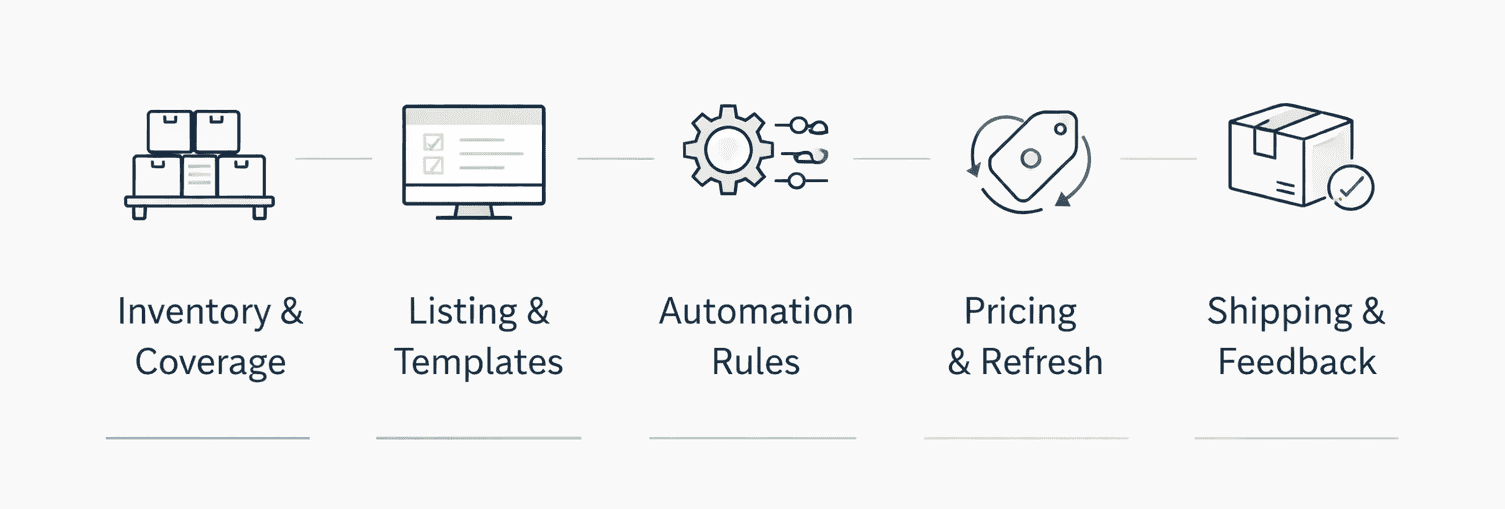
It is eBay-first, not catalog-first. The product is shaped around how eBay Motors actually behaves: how listings age, how Best Offer really works, how buyers search, and how small changes in activity affect visibility.
Fitment is not hidden. The goal is to make it clear where your compatibility data came from, where it is missing, and how it affects returns and sales. Our upcoming Fitment engine goes even further by turning fitment into a controllable layer rather than an untouchable black box.
Listing automation is not just a relist switch. MyListerHub lets you define and run real strategies for when to refresh, when to rest, when to rebuild, and when to adjust price, without babysitting.
Messaging and offers are not ignored. They are tied into your workflows, so that auto parts buyers get fast, accurate answers and fair offers without eating your entire day.
Multi-store control is not an afterthought. You get one place to manage listings, rules, and templates across several eBay stores, with protections to reduce accidental duplicates and policy risks.
Reporting is not just a chart of sales over time. It shows what actually turns, what dies, where margins leak, and which automation rules are doing their job.
If you want to see how AI will plug into this without creating more manual cleanup, read about Cavio AI: The Smarter, Faster Way to Generate and Optimize eBay Listings – it explains how image-to-listing, AI titles, and description generation fit into a serious seller’s workflow instead of replacing common sense.
In short, MyListerHub is not trying to be “another listing tool that also supports auto parts.” It is trying to be the control panel for people who take eBay Motors seriously.
What You Can Do Next
You do not have to rip everything out tomorrow. The smartest move is usually a focused test.
Pick a slice of your catalog that matters: a few hundred SKUs in a category where you know there is demand, or a batch of older stock you would love to clear profitably.
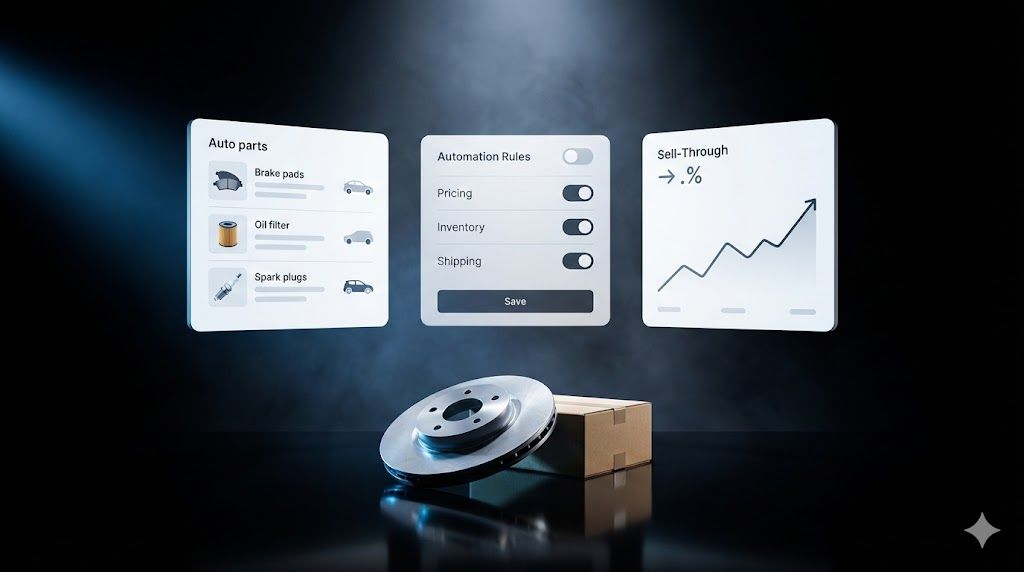
Bring that segment into MyListerHub, set up basic fitment flows, listing lifecycle rules, and simple pricing logic, and let it run side by side with your existing setup for a couple of months.
If you see less manual work, fewer “did not fit” headaches, more predictable pricing, and healthier sell-through, you know you are moving in the right direction. At that point, it is not about theory or marketing lines. It is about what actually makes your life easier and your store more profitable.
For more on getting older inventory moving again, combine this article with Optimize Stale Listings on eBay: Proven Tips to Boost Visibility and Sales – use that as the tactical playbook while MyListerHub handles the automation in the background.
Common Questions Sellers Ask:
How do I reduce “does not fit my vehicle” returns when selling auto parts on eBay?
You reduce “does not fit my vehicle” returns on eBay by tightening your fitment data: use structured Year-Make-Model fields, add clear engine and trim notes, reuse proven fitment templates across similar parts, and regularly review listings that generate fitment-related returns so you can correct the data and stop repeating the same mistake.
What is the best way to automate stale eBay auto parts listings and price changes in 2026?
The best way to automate stale eBay auto parts listings and price changes in 2026 is to use software that supports rule-based stale-listing detection, scheduled Sell Similar relists, small scheduled price adjustments within set profit ranges, and basic message and offer automation, so old inventory is refreshed and repriced without constant manual editing.
Coming Soon: Advanced Fitment Tool for eBay Auto Parts Sellers
We’re getting ready to launch our most advanced fitment and compatibility engine for eBay auto parts sellers, in early 2026. Our tool is designed to make fitment transparent, easier to correct, and tightly connected to your listings, pricing, and returns.
Right now, it's available only to a small group of beta users inside MyListerHub while we refine coverage, workflows, and reporting based on real seller feedback.
Stay tuned. If you’d like to be one of the first sellers to use it, book a demo and ask to join the beta waiting list. We’ll review your store, confirm you’re a good fit, and reserve your spot as we expand access.

by Jack Blum